
A practical guide to habitat creation, artificial nesting, and conservation management
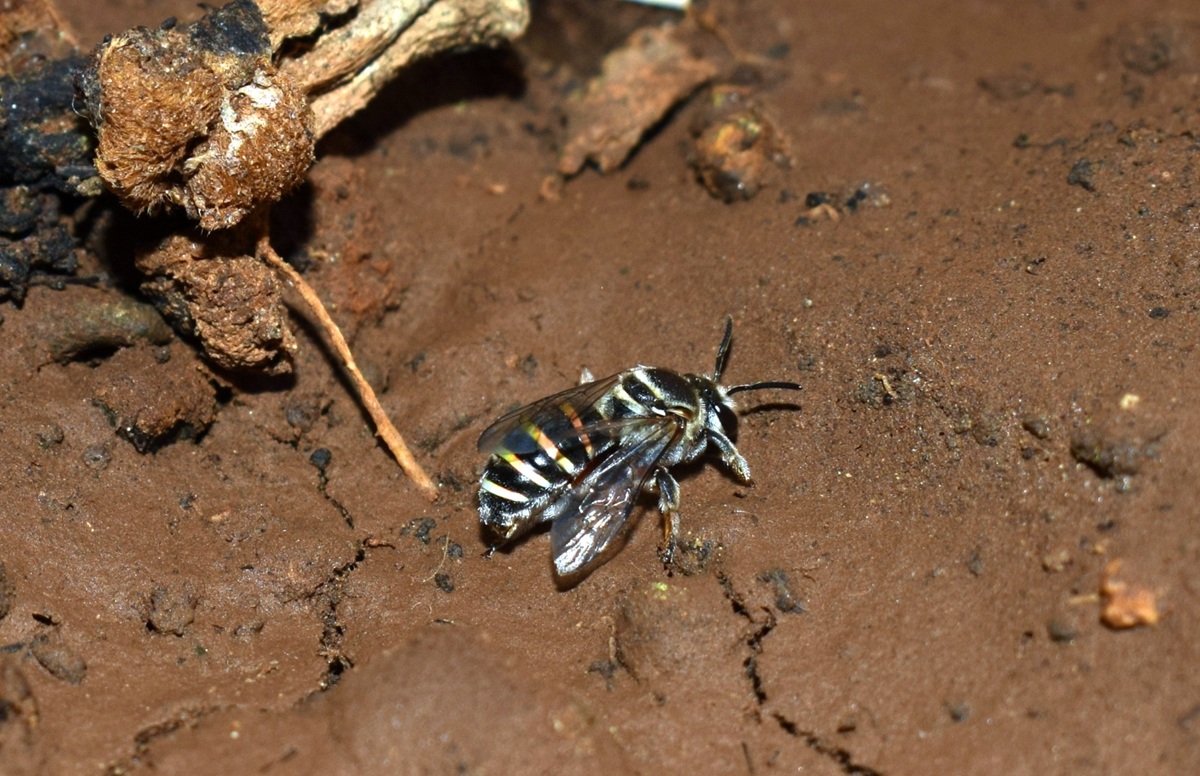
When most people hear the word “bee”, the picture that comes to their mind is honeybees in wooden boxes arranged neatly along bunds and boundaries. While this is a familiar sight, this image represents only a small fraction of bee diversity. A much larger and often unnoticed community lives quietly below the surface of the soil. These are solitary and efficient ground–nesting bees who are deeply connected to the health ecosystem.
Across farms, orchards, forest boundaries and village landscapes in India, these ground-nesting bees play a crucial role in pollination. Yet, they remain largely unrecognised because their nests are underground. Unlike honeybees or bumblebees, they do not form colonies or produce honey. Each female works independently, constructing her own nest, gathering food, and ensuring the survival of her offspring. Their lives are simple, but their ecological contribution is far-reaching.
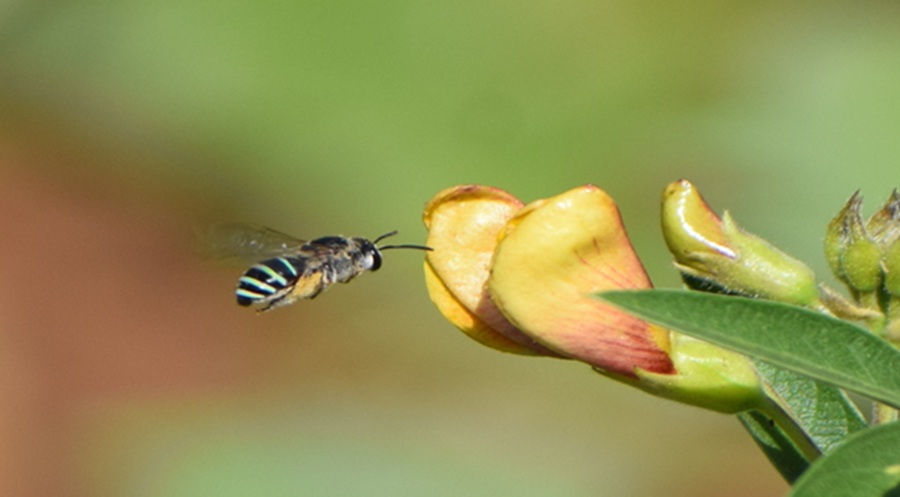
Recognising these bees begins with observing some minute details. Tiny holes in the soil, often surrounded by loose particles, mark the entrances to their nests. Bees may be seen flying low over the ground, pausing and hovering as they assess suitable nesting sites. In undisturbed, sunlight areas, multiple nests may occur together, forming quiet aggregations that signal a healthy habitat.
Ground-nesting bees include diverse groups such as mining bees and sweat bees, among others. Their nesting process is remarkably systematic. A female excavates a narrow tunnel that branches into small chambers. Each chamber is provisioned with pollen and nectar, forming a food reserve for the developing larva. After laying a single egg, she seals the chamber and repeats the process. There is no cooperation or division of labour, just consistent individual effort driven by instinct.
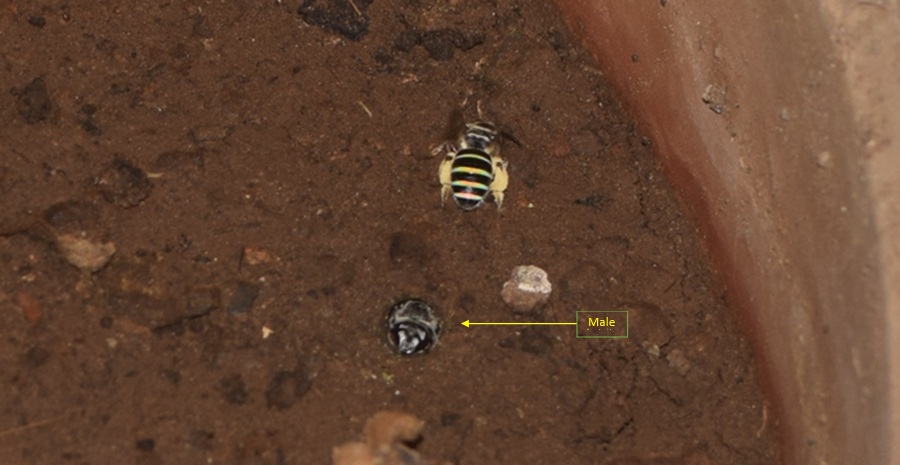
In some species however, males are often seen guarding the entrance of the nest, while the female forages for nectar and pollen for the developing young. The male usually remains inside near the entrance, camouflaged as a small stone or soil particle in the soil. If he senses danger or disturbance near the nest, he may temporarily prevent the female from entering until the surroundings are safe. Once the threat passes, the female is allowed to enter the nest and continue provisioning activities.
Despite their ecological importance, these bees are often misunderstood. In reality, they are gentle, as they have no hive to defend. Their activity is closely linked to seasonal flowering and soil conditions, making them sensitive indicators of environmental change. In places where they thrive, the soil is usually well-drained, biologically active, and relatively undisturbed.
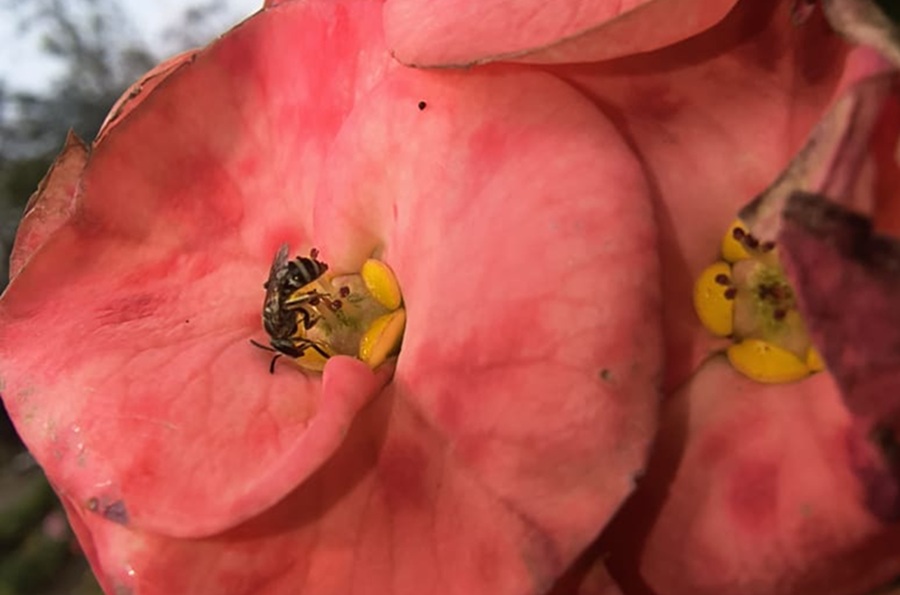
Their contribution to ecosystems and agriculture is significant. Many ground–nesting bees are highly effective pollinators, sometimes outperforming managed species for certain crops due to their foraging behaviour and body structure. They support fruit set and seed production in crops such as pulses, oilseeds, vegetables, and fruit trees. At a broader level, their presence enhances biodiversity and strengthens ecosystem resilience (Klein et al. 2007; Ollerton et al., 2011).
One of the most encouraging aspects of these bees is that their conservation does not require expensive infrastructure. A simple and effective method involves creating artificial nesting habitats using soil-filled pots. This approach is practical, low-cost, and adaptable to farms, institutions, and even small home gardens.
This process begins with preparing a suitable soil mixture. A combination of 70% of red soil, 20% of well-decomposed compost and 10% of sand provides the right balance of structure and organic content. The soil should be firm enough to hold tunnels but loose enough for bees to excavate easily. Wide shallow posts work well, as they provide sufficient surface area for nesting.
Placement is equally important. Pots should be kept in the shade preferably semi-sunny areas as most ground-nesting bees prefer warmth and direct sunlight. Heavily shaded or waterlogged locations should be avoided. The surrounding area should remain relatively undisturbed to facilitate nesting activity.
Moisture management requires special care. The soil should be slightly moist but never wet. A gentle sprinkling of water is enough to maintain suitable conditions. Excess water can collapse tunnels and destroy brood development, making overwatering one of the most common and damaging mistakes. The key lies in moderation – small amounts applied carefully.
Nesting habitat alone is not sufficient; bees also need reliable food sources. Planting nectar- and pollen-rich species near the nesting area ensures continuous foraging opportunities. Crops such as mustard, sunflower, sesame, and pulses are excellent choices. An integrated approach works best. By combining nesting substrates with flowering plants in proximity, it is possible to create a self-sustaining microhabitat where bees can both nest and forage efficiently. Over time, such spaces can support a diverse and stable pollinator community.
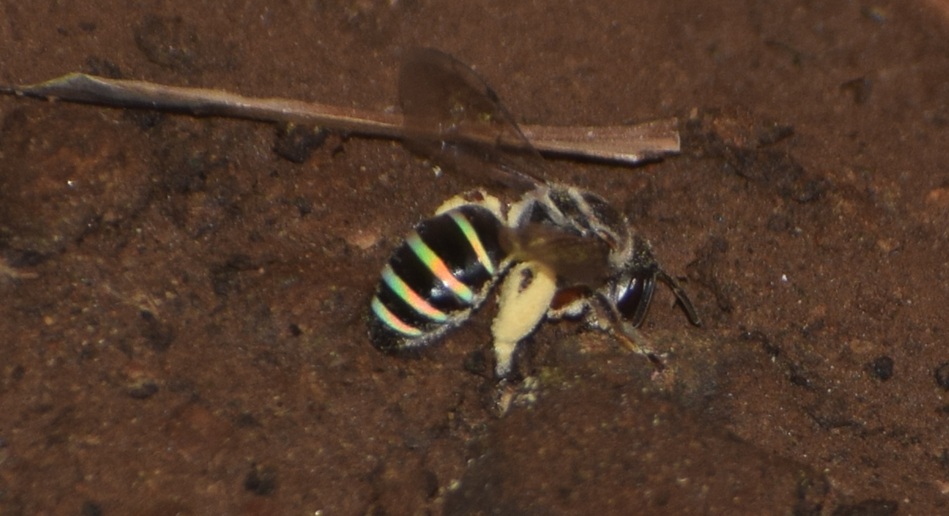
Once established, the habitat begins to attract bees naturally. The process starts with exploration, followed by excavation, provisioning of chambers, egg laying, and sealing. As more bees adopt the site, multiple nests may develop within a single pot, forming small aggregations that indicate successful colonisation.
Long-term success depends on simple but consistent management. Disturbance should be minimised – soil should not be dug or frequently moved. Watering should remain gentle and controlled. The use of pesticides and herbicides near nesting areas must be avoided, as even low levels can harm bees. Occasional seasonal maintenance, such as refreshing soil, can be done carefully when nests are inactive.
These habitats can be easily integrated into different landscapes. On farms, they can be placed along field margins; in orchards, near flowering trees; and in home gardens, even a few pots can make a difference. They are also valuable in educational and research settings, offering opportunities to study pollinator behaviour and biodiversity.
It is important to avoid common mistakes such as overwatering, using compared or clay-heavy soil, or neglecting nearby floral resources. Small adjustment in these factors can significantly influence the success of the system. Beyond their ecological function, these habitats offer a chance to observe to connect with nature. Watching a bee emerge from a tiny hole, carry pollen, or hover over soil reveals a hidden world that often goes unnoticed. Documenting such observations can contribute to local biodiversity knowledge and inspire conservation efforts. Ground-nesting bees remind us that not every important ecological work is visible. They operate quietly, beneath our feet, sustaining pollination processes that support both natural ecosystems and agriculture. Their conservation does not require complex interactions – only awareness, a suitable habitat and a willingness to accommodate their needs.
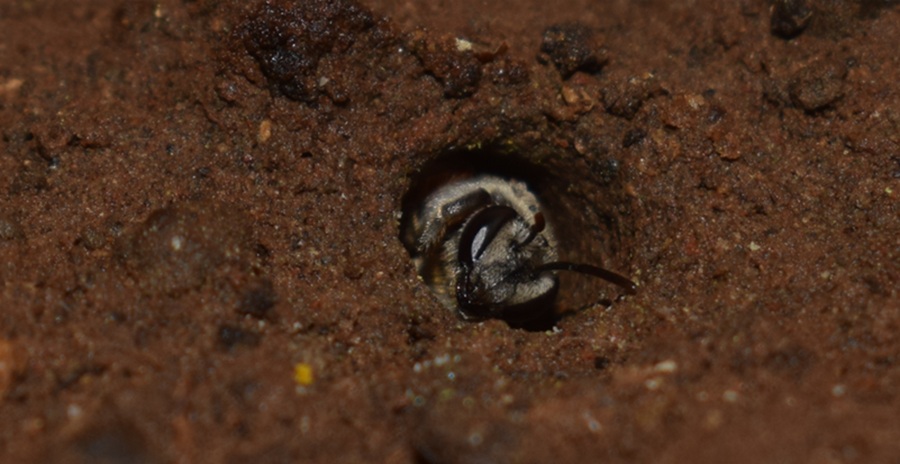
Each pot prepared, is more than just soil. It is a living system, a refuge for pollinators, and a small but meaningful step toward ecological balance. In today’s times when natural habitat is under pressure, such simple actions can make a lasting difference.
Note: Students and Researchers with an aptitude for field work and with a keen interest in studying ground-nesting bees, are welcome to contact BAIF Central Research Station, Uruli Kanchan, Pune, Maharashtra, India by E-mail at crsbaif.baif.org.in.
References
2007. Klein, A.M., Vaissiere, B.E., Cane, J.H., Steffan-Dewenter, I., Cunningham, S.A., Kremen, C. and Tscharntke, T. Importance of Pollinators in changing landscapes for world crops. Proceedings of the Royal Society B, 274, pp.303-313.
2011. Ollerton, J., Winfree, R. and Tarrant, S. How many flowering plants are pollinated by animals? Oikos, 120, pp.321-326.
Vinod Borse, Dhananjay Jadhav, Deepak Patil and Sadashiv Nimbalkar

Vinod Borse
Associate Thematic Programme Executive (Agroecology)
BAIF Central Research Station, Uruli Kanchan, Pune
0 Comments