
Nature-based Solutions
Building on its ongoing nature-positive agriculture efforts, BAIF, in collaboration with international research partners, continued to address the challenges of monocropping, resource depletion and land degradation through Nature positive Solutions (NpS) and Nature based Solutions (NbS) in Akole and Shahada clusters of Maharashtra. These interventions integrated traditional knowledge with modern science to conserve agrobiodiversity, bioresources and sustainable management of soil and water resources, contributing to land and ecosystem restoration.
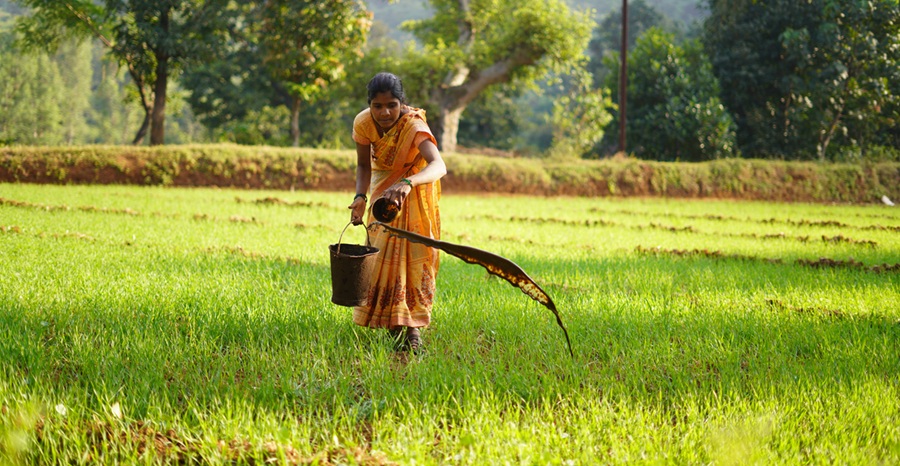
During the year, under three existing community seed banks, 11 on-farm conservation centres were established for 134 cultivars of paddy, finger millet, little millet, barnyard millet, foxtail millet, maize, sorghum, moth bean and green gram to ensure conservation and seed sovereignty. Participatory varietal selection with 377 participants was conducted for 96 varieties, along with 500 crowdsourced tricot trials for 138 varieties, identifying climate-resilient crops, enhancing adaptability and farmer-led knowledge systems. Three participative events on wild foods and local biodiversity engaged more than 300 participants, reviving traditional Adivasi culinary practices and underscoring their nutritional and cultural value. Agroecosystem services were enhanced by installing 24 Indian honey bee (Apis cerana indica) hives, three bee hotels, 19 stingless bee boxes, and planting nectar-rich species to support pollinators, improve natural pest control, and strengthen ecosystem health. Community-led land restoration was advanced through agroforestry and afforestation with native fruit and Non-Timber Forest Product (NTFP) species like mango, mahua, chironji and bamboo. A total of 18,200 saplings and 6,000 seeds were planted over 19 ha in Shahada, along with five agroforestry model plots. Silvipasture systems for fodder security and bamboo-based systems for land restoration were established in Akole cluster.
The Circular Bioeconomy Innovation Hub (CBE-IH) promoted circularity-based innovations through field demonstrations and trainings on biogas units, biochar production, composting, and Black Soldier Fly-based waste management. Building on last year’s feasibility study, three circularity models were successfully established in the field. Over 400 stakeholders, including youth and women, received hands-on training to develop scalable waste-to-value solutions. The Circular Bioeconomy Innovation Challenge engaged college students to address real-world, waste-related challenges. These integrated actions reflected BAIF’s holistic NATURE+ approach and replicable and scalable models to promote climate resilience, biodiversity and sustainable livelihoods.