
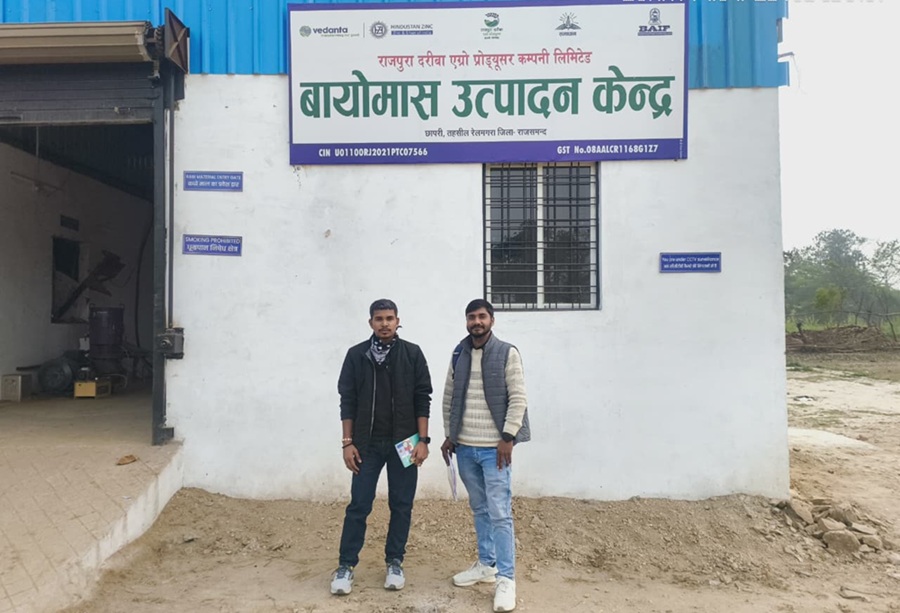
In the forests and countryside of India, Lantana, locally known as Jarmari, is an extremely dangerous shrub, which has become a major concern for the people living in these rural areas. This plant grows on its own;It absorbs soil nutrients and moisture, making the land toxic to cattle, destroying crops, and causing economic damage to agriculture by harbouring wild animals and pests. It is a fast-spreading shrub that completely destroys the native vegetation and poses a major threat to biodiversity. However, now with the help of technology, this wild shrub can be turned into a great source of energy by turning it into biomass pellets. This article delves into the industrial use of lantana and the entire process of pellet manufacturing.
Why Lantana? (Raw Material Advantage)
Lantana is an ideal choice as a biomass because of its following characteristics:
1. High Calorific Value
The energy value of lantana wood is very high.
• Its calorific value is around 3800 to 4200 kcal/kg .
• It competes with many common woods and even inferior quality coal (lignite).
2. Abundance of Lignin (Natural Binder)
While making pellets, a ‘binder’ or glue is needed to hold the pellets together.
• The amount of lignin in lantanas is very good.
• When it is pressed (compression) in the machine, the heat melts the lignin and acts as a natural glue. With this, you do not need to add any chemical on top and the pellet becomes as strong as stone.
3. Low Ash Content
When coal is burned, up to 20-30% ash is released, which corrodes the boiler.
• The ash content of Lantana pellets is only 2% to 5%.
• This increases the lifespan of the machines and also reduces pollution.
4. Free and Unlimited Raw Material Cost
Lantana is an ‘invasive weed’.
• The farmer does not have to provide seeds, fertilizers or water to grow it.
• It is spread free of charge over forests and barren land. The government and the forest department also encourage its removal, so that raw material can be obtained very cheaply or only at the price of wages.
5. Ecosystem Restoration
If Lantana Camara is burnt, there is pollution. But if pellets of lantana are prepared, then:
• The forests will be freed of this poisonous bush.
• This will improve the ground water level and provide space for other native grasses/plants to grow.
6. Low Moisture Retention
Lantana wood dries quickly. For pellets, 10-12% moisture is needed, which is easily obtained by exposing lantana to the sun.
Comparing fuel sources, Lantana pellets are a superior and environmentally friendly alternative to coal. Coal causes high pollution, emits carbon dioxide and releases 20-30% ash, while Lantana pellets are carbon-neutral and release only 2-5% ash.
From an economic perspective, coal is often expensive and has to be imported, while Lantana offers an affordable and local solution. Most importantly, while coal mining damages the earth, clearing the invasive lantana for fuel actually helps restore wasteland and improves soil health.
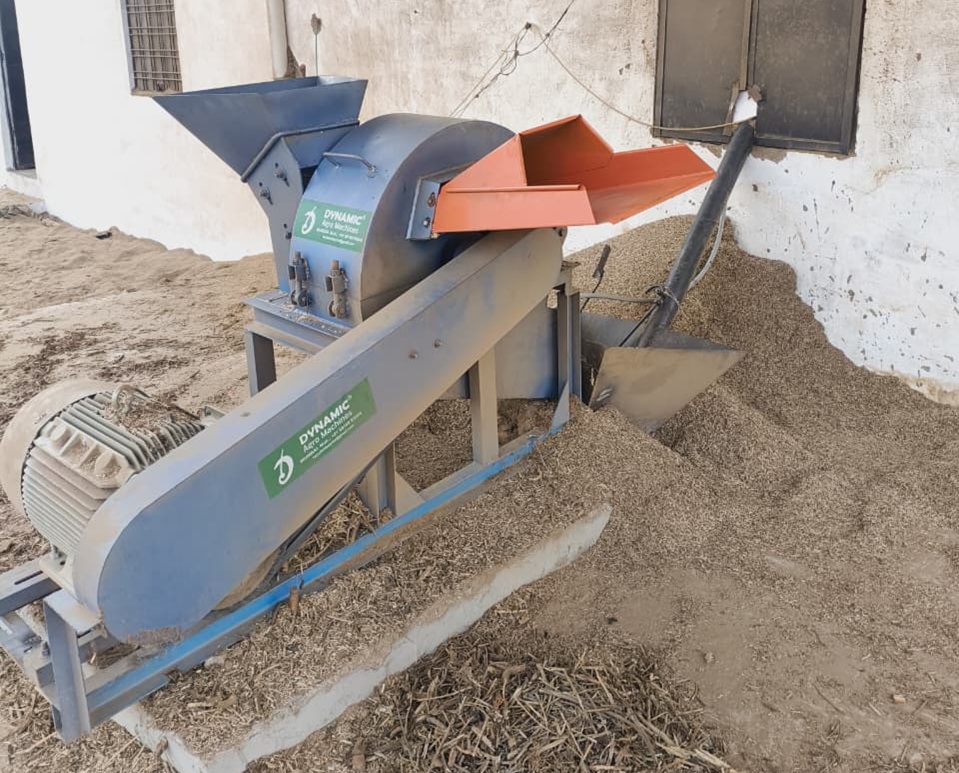
The Detailed Process of Pellet Manufacturing
A systematic process is followed to prepare pellets from lantana:
- Collection and Harvesting: Lantana from forests or wasteland is harvested from the top of the root. This can include both dry and green woods.
- Drying: The moisture level should be 10% to 12% for making pellets. The cut lantana is dried in the sun or by using a ‘dryer machine’.
- Crushing and Chipping: Large bushes are put into a ‘wood chipper’ machine and turned into smaller pieces. It is then converted into fine powder or sawdust through the ‘Hammer Mill’.
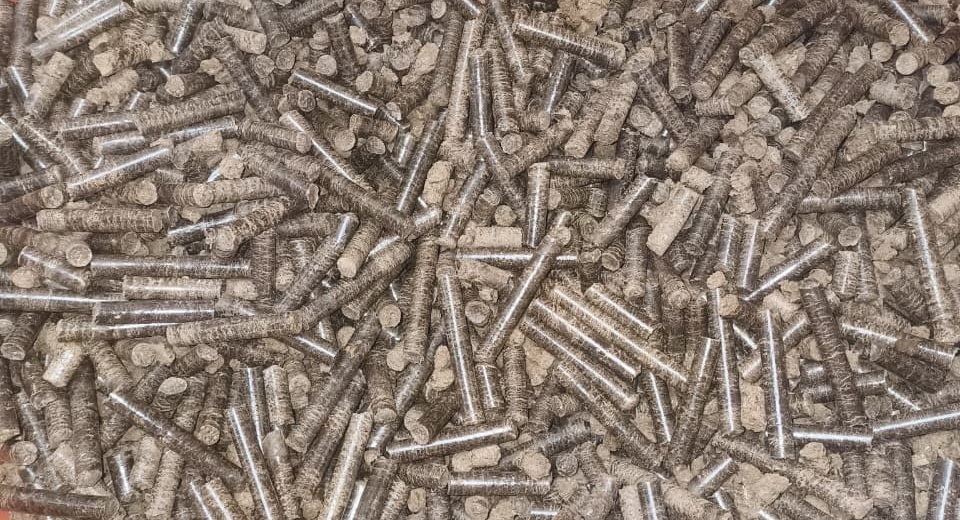
- Pelletisation: This is the most important step. The pellet is passed through the moulds (dyes) of the ‘pellet mill’ at high pressure. Due to high temperature and pressure, the pellet compresses and takes the form of a hard, shiny and cylindrical pellet.
- Cooling & Packing: Pellets are heated when leaving the machine. These are cooled in a ‘pellet cooler’ and then packed in sacks to protect them from moisture.
Technical Specifications
The characteristics of a standard lantana pellet are the following:
- Size: 6 – 10mm Diameter
- Humidity: < 10%
- Ash Content: 2 – 5% (much less than coal)
- Density: > 600 kg/m³ (easy to transport)
Environmental and Economic Benefits
Coal Substitution: The use of pellet in place of coal in industries (such as textiles, brick kilns, and power plants) reduces carbon emissions.
- Forest Conservation: Removing lantanas allows native plants and grasses to regrow in forests.
- Employment Generation: Local people obtain employment through harvesting in rural areas.
- Cheaper energy: These pellets are economical and more efficient than coal.
Economic Benefits via Soil
- Reclamation of Wasteland: Land covered with lantana is of zero value to the farmer. After clearing it, the land is ready for cultivation of fodder again, which increases the market price of the land.
- Compost saving: As removal of lantana returns the natural fertility of the soil, the cost of chemical fertiliser is reduced in the crops grown later on.
- Benefits in animal husbandry: When lantana is removed, nutritious grass starts growing. This provides free and good fodder to the animals, which increases milk production and increases the income of the farmer.
- Carbon Credits: If lantana is removed on a large scale and trees are planted instead, in the future, one can also earn money from ‘carbon credits’ through Soil Carbon Sequestration.
Industrial Uses – Largest Market
In factories that require a large amount of heat, pellets are used instead of coal:
- Thermal Power Plant: Co-firing 5-10% biomass pellets with coal is now becoming mandatory to generate electricity.
- Textile and Textile Mills: Here it is used to operate boilers and in the manufacture of steam.
- Brick Kilns: As an alternative to coal for baking bricks.
- Food Processing Industry: For manufacturing of steam in milk dairies, biscuit factories and sugar mills.
- Chemical and Pharma Company: For heating drugs and chemicals.
Commercial Uses
In cities and towns where larger machines are needed:
- Hotels and Dhabas: To operate tandoors, furnaces and large water heaters.
- Hospitals: In large boilers for heating water and drying clothes (laundry).
- Community kitchens: Kitchen of a gurdwara or mid-day meal for cooking in large pots.
Domestic Uses
- Pellet stoves: There are special types of stoves for cooking in which very little smoke from pellets is emitted.
- Room Heaters: Pellets are burnt instead of wood to keep homes warm in colder areas.
Conclusion
The creation of biomass pellets from Lantana is an excellent example of ‘Waste to Wealth’ and ‘Problem to Solution’. While this invasive weed was swallowing our forests, bio-diversity, and fertile land, it has now become an inexhaustible source of clean energy through technology and innovation.
The project not only provides industries with a cheaper and greener alternative to coal but also plays a revolutionary role in generating employment in rural areas, rejuvenating pastures for animal husbandry, and enhancing soil fertility.

0 Comments