LIVESTOCK DEVELOPMENT
Livestock-based Livelihoods and Enteric Methane Emissions Reduction
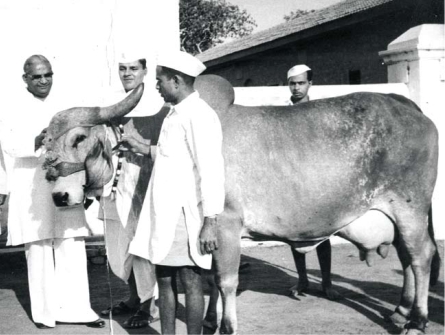
Dr. Manibhai Desai made Initial efforts for dairy development prior to founding BAIF, by maintaining a herd of champion Gir cows at the Nisargopachar Ashram at Uruli Kanchan which was awarded the Gopal Ratna Award for five consecutive years.
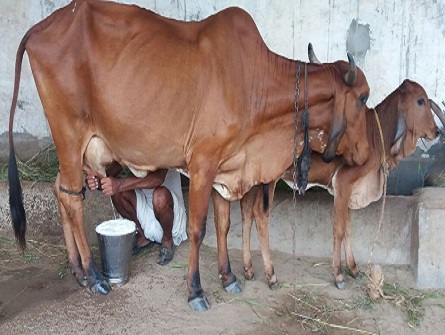
The Artificial Insemination (AI) delivery system was launched by BAIF at the doorsteps of farmers. Dairy development was the first step in fulfilling the mission of gainful self-employment and sustainable livelihood for the rural population as it could positively impact millions of farming households in the country.

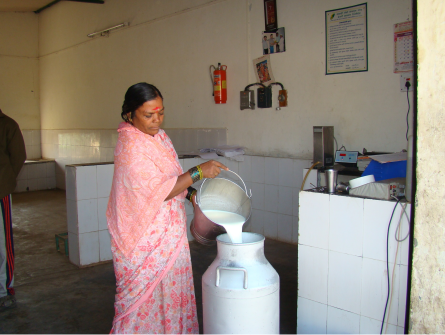

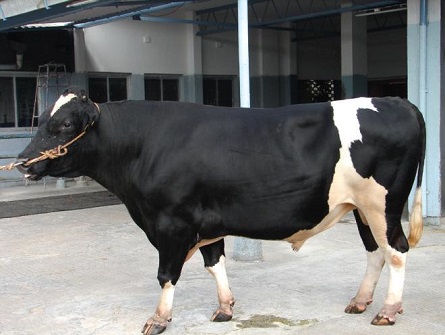
The strategy for meeting this goal involved producing a superior progeny by breeding local non-descript cattle with semen from home-born exotic bulls of high genetic merit and then back-crossing the crossbreds with high genetic merit semen of Indian dairy cattle breeds. The superior progeny of cattle and buffaloes represented the modern ‘Charkha’ providing gainful self-employment and remunerative livelihood for millions of families in their own environs.
During FY 2025-26, 5.91 million Artificial Inseminations were performed with 45-50% conception, using 31.57 % exotic and crossbred bull semen, 24.29 % indigenous cattle breed semen, and 44.14% buffalo semen.
Availability of sexed – sorted semen produced in India, has been introduced at the field level resulting in more than 90% sex ratio favouring female cows and about 40% conception rate.
The state-of-the-art semen production facility at the Central Research Station, Uruli Kanchan, Pune, houses the largest collection of Indian and exotic breeds of cattle and buffalo bulls. The exotic bull mother farm of HF and Jersey is among the best in the country.
Work initiated on improvement of indigenous breeds and application of genomics is being continued under field conditions.


During FY 2025-26, the Goat Development Programme, with sustainable livelihoods, women empowerment and nutritional security as its goals, was implemented in 11 states covering 32,629 families in 1,662 villages.