Signing of MoU between BAIF and NDDB

Signing of MoU between BAIF and NDDB

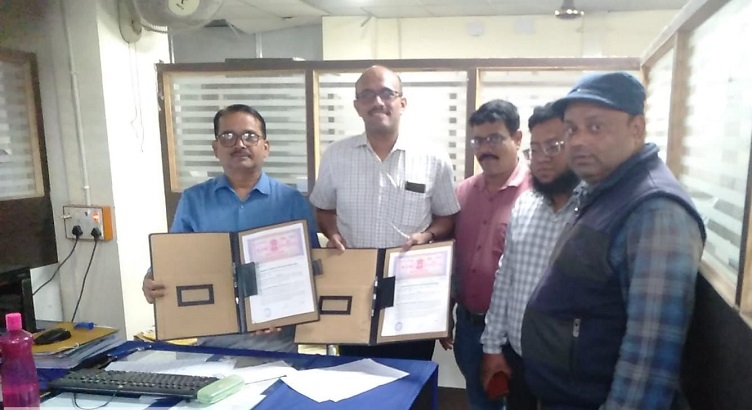
Dr. Bharat Kakade, President and Managing Trustee, BAIF signing the MoU

An MoU was signed between National Dairy Development Board and BAIF Development Research Foundation on the 57th Foundation Day of BAIF on August 24, 2023 for promotion of collaborative research, training and outreach programmes and facilitation of exchange of scientific outcomes and research applications for dairy development in the country. This overarching collaborative agreement between the apex dairy development organization in India and a leading civil society organization was a watershed event in the history of dairy development in the country.

The agreement was signed between Dr. Bharat Kakade, President and Managing Trustee, BAIF Development Research Foundation, Pune and Dr. Meenesh Shah, Managing Director, National Dairy Development Board, Anand in the presence of research scientists and senior officials from BAIF and NDDB.

Dr. Meenesh Shah Managing Director, NDDB signing the MoU

BAIF celebrates 77th Independence Day of the country

BAIF celebrates 77th Independence Day of the country

India stepped into its 77th Independence Day after completing 76 years of independence.  The day also marked the culmination of the nationwide enthusiastic celebration of “Azadi Ka Amrit Mahotsav” which was announced in 2021 when India entered its 75th year of independence.

The tri-colour was hoisted at the headquarters of BAIF amidst an atmosphere charged with patriotism, pride and joy.  The programme began with a ceremonial Guard of Honour by the security staff stationed at the headquarters followed by Dr. Bharat Kakade, President, BAIF hoisting the national flag in the presence of BAIF Pune team including Mr. Sujit Gijare, Group Vice President, HR and Administration and singing of the national anthem in unison.

While welcoming the assembled staff which comprised of Senior Management, Senior Programme implementation teams and school-going children of the staff, Dr. Kakade made a plea to everyone to make an effort to contribute to the development in the country. This was the need of the hour as he lamented that out of the total 191 countries in the world, India ranked 132 which meant that there were 131 countries above India which were better positioned in terms of progress and development in their respective countries.  Against this background, he expressed the urgent need to ensure development in every sphere in our country and especially in the rural sector which is still struggling due to lack of basic infrastructural facilities and attention.  He called upon the BAIF team to continue their mission and focus on addressing the problems of the rural poor.  Dr. Kakade highlighted the scope for BAIF to contribute to the economic development of the country through sustainable development which can also improve the overall status of India worldwide. He also highlighted the need for suitable climate actions to address climate change-induced issues in rural areas of our country.

Dr. Avinash Deo, Adviser, BAIF, highlighted the scope of the livestock development sector in ensuring rural prosperity and the contribution of BAIF to this sector through its dairy husbandry and smallholders-focussed development. Mr. Gijare highlighted the significance of this celebration for BAIF and conveyed his good wishes to the audience on this occasion.

Flag hoisting ceremony was also held in various State Headquarters and operational areas of BAIF with immense pride and enthusiasm.

Methane Emission Mitigation Strategies in Livestock

Methane Emission Mitigation Strategies in Livestock

Dr. Manojkumar Aware
July 17, 2023
Dr. Manojkumar Aware
July 17, 2023

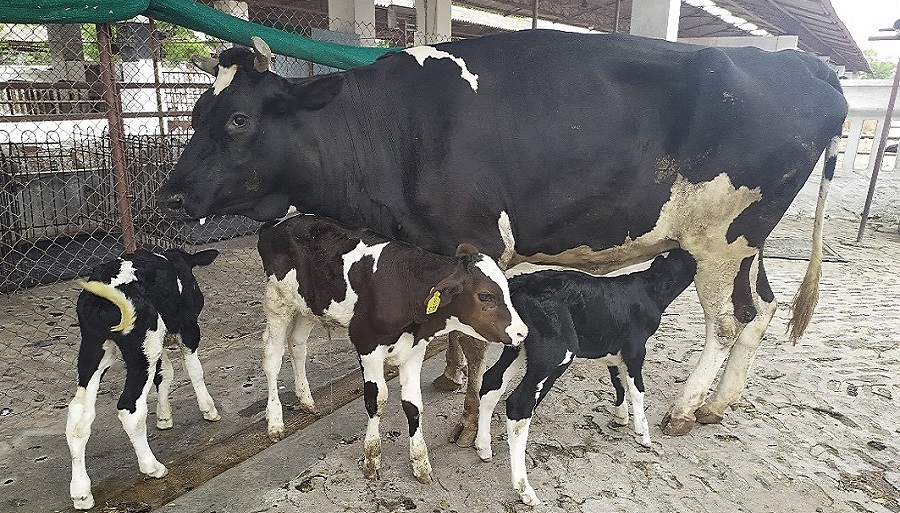
Global warming is a pressing global issue that has severe implications for the overall ecosystem. One significant contributor to this problem is the emission of methane from animals, which is influenced by various factors including feed type, feed intake, ambient temperature, rate of feed consumption, the balance of nutrients in the feed for microbial growth and microbial composition in the animal’s gut. To address this issue, a holistic livestock development approach can be adopted to improve the milk production and provide sustainable livelihoods for the rural community. Following strategies can be recommended and adopted to reduce the methane emission:

Improved animal nutrition and Ration Balancing Programme: Enhancing feeding practices and feed conversion efficiency is crucial in minimizing methane production. By increasing the energy content and digestibility of feed, less feed is converted to methane resulting in more productive output. Balanced diets incorporating high-quality forages can improve animal health, digestion, and ultimately reduce methane emissions. A balanced ration should provide protein, energy, minerals and vitamins from dry fodder, green fodder, concentrates, mineral supplements etc. in appropriate quantities to ensure optimal performance and animal health.

Use of anti-methanogenic feed supplements: Certain feed additives, such as tannins, essential oils, and enzyme supplements, have proven effective in reducing enteric methane emissions in livestock. With the help of research activities certain anti-methanogenic feed supplement have been developed which can be effectively and safely incorporated into animal diet like “Harit Dhara”. Based on the results of a feeding trial of Harit Dhara, anti-methanogenic feed supplement at different ICAR research institutes and possible reduction of methane emission up to 17 – 20%, BAIF has purchased a license of Harit Dhara for production and supply through its own programmes as well as from private customers.   It has been developed from tannin-rich plant-based sources. Tropical plants containing tannins, bitter and astringent chemical compounds, are known to suppress or remove protozoa from the rumen. It decreases the population of protozoa microbes in the rumen, responsible for hydrogen production and making it available to the archaea (structure similar to bacteria) for reduction of CO2 eq. The use of Harit Dhara promotes higher milk production by increasing the production of propionic acid, providing more energy for lactose production and weight gain.

Changes in animal management and breeding: Improving animal productivity through selective breeding and enhanced management practices can significantly reduce methane emissions per unit of output. This approach requires a decrease in total animal numbers coupled with increased productivity to meet consumer demands.

Improved Breeding and genetics: Selective breeding programmes can be employed to develop dairy breeds that are more efficient in feed utilization and have lower methane emissions. Identifying and breeding animals with naturally low methane production can contribute to long-term emission reductions.

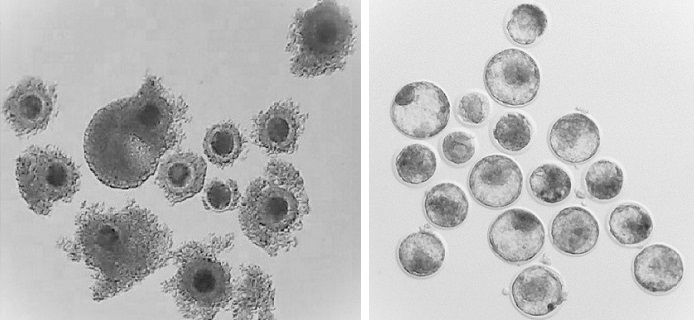
Use of sexed sorted semen: Sorted semen is a sexed semen containing either X or Y sperms and the use of it produces a desired sex (male or female) animal. The male calves are both neglected and under fed by the farmers due to less utility to the farmer. The sorted semen technology will produce 90% female calves.  This technology helps to reduce the economic losses and challenges associated with male calves, leading to improved animal management.

Dung and Manure Management: Proper management of livestock waste, such as dung and manure, is crucial in reducing methane emissions. BAIF has contributed to research and development in establishing an Integrated Renewable Energy and Sustainable Agriculture (IRESA) Model-Based Biogas Unit. Pre-fabricated Floating Dome Biogas Plants are the first portable and ready-to-use plants. These Biogas Plants, made from non-toxic polyethylene material are free from any contamination, chemical resistant and blended with stabilizers, Anti Corrosive and Anti Acidic. These are designed especially for Semi Urban and Rural areas to produce biogas from wet waste and animal dung. This is easy for operation and cleaning. The generated biogas can be used for domestic purpose like cooking which is sufficient for a family of 5-6 members. Each unit can contribute 4 tons of CO2 equivalent emission reduction per year.

Furthermore, the digested slurry from the biogas unit can be utilized as organic fertilizer for crops or fish ponds. After continuous research and development, we have established a 5G filter technology developed to gain the benefits of this IRESA based Biogas Model. The 5G filter is used to separate the solid and liquid waste. The slurry separated water and LOF Culture can be used for kitchen garden plantation by drip irrigation. The application of organic manure improves soil quality by reducing salinity/alkalinity, increasing porosity and enhancing water-holding capacity. BAIF has obtained 2 patents jointly with Sankalp Med-Education Society, Pune viz. “Method and system for production of enriched organic fertilizer from biogas slurry separated water” for Liquid Organic Fertilizers (LOF) on 18th January, 2023 and “Method and system for separation of solids in biogas plant slurry for resource reutilization” for IRESA based Biogas Filter on 29th March, 2023.

Adopting a holistic livestock development approach that encompasses improved animal nutrition, anti-methanogenic feed supplements, changes in animal management and breeding, and effective dung and manure management can significantly reduce methane emissions. These strategies not only contribute to mitigating global warming but also improve milk production and provide sustainable livelihoods for rural communities.

Dr. Manojkumar Aware

Chief Thematic Programme Executive
Animal Nutrition & Climate Action 
BAIF, CRS, Uruli Kanchan, Pune

Linkedin Profile

Disaster Management: BAIF’s Response to Flood-Hit Victims of Uttarakhand

Disaster Management: BAIF’s Response to Flood-Hit Victims of Uttarakhand

In line with its mission of rehabilitation of rural communities, BAIF has always stepped forward to provide immediate relief to families affected by various natural calamities in its operational areas across the country. 

In the recent floods which have ravaged Haridwar and caused immense loss to a large number of families in the region, BAIF Uttarakhand with immense concern for the affected families and extremely keen to provide relief as soon as possible, subsequent to its meeting with Mr. Ashish Mishra, IAS, Sub-Divisional Magistrate of Bhagwanpur block on July 15, swung into action and contributed 200 food kits to the Chief Minister’s Flood Relief Fund and delivered the food kits to the Bhagwanpur Supply Office which is functioning as the Control Room for Roorkee on July 16, to meet the requirement. Thus, BAIF showed the way for other organisations to come to the rescue of the helpless families and to help them to cope with this calamity by organising supply of essential resources and arranging for relief measures as a part of its Disaster Management Plan. BAIF Uttarakhand expresses its gratitude to the team at the SDM office at Bhagwanpur, BAIF’s Senior Management, HVDP Haljora Project team supported by Panasonic CSR and BAIF’s Dehradun team for their support and timely action.

BAIF and Godavari Cooperative Milk Union reinforce their partnership in Dairy Value Chain Development

BAIF and Godavari Cooperative Milk Union reinforce their partnership in Dairy Value Chain Development

The more than five-decades-old association between BAIF and Godavari Cooperative Milk Union, Kopargaon which has always been marked by mutual understanding, admiration and support, was reinforced on June 21, 2023 on the occasion of the 19th death anniversary of the visionary leader of Western Maharashtra – Shri. Namdeo Parjane Patil, former Chairman of Godavari Khore Sahakari Dudh Utpadak Sangh Ltd., Kopargaon and a strong supporter of BAIF and its Founder – Dr. Manibhai Desai.

On this occasion, Artificial Insemination (AI) Technicians associated with BAIF/BAIF Livelihoods Maharashtra and enterprising dairy organisations in the region, were felicitated by Dr. Hemant Vasekar, Commissioner, Animal Husbandry, Maharashtra in the presence of Dr. Shitalkumar Mukane, Additional Commissioner, Animal Husbandry, Maharashtra, Dr. Sunil Tumbare, Assistant Director, Animal Husbandry Department, Ahmednagar, Shri. Rajesh Parjane Patil, Chairman, Godavari Cooperative Milk Union and Mr. V.B. Dyasa, Regional Director, BAIF Livelihoods.

Navnath Kawade, Balasaheb Kolhe and Namdev Gaware were adjudged the Highest Achievers of Conventional AIs while Bhausaheb Jadhav, Gaurav Jadhav and Jalandar Sable recorded the highest Sorted Semen AIs during 2022-23. Various small and medium dairy organisations were recognised under various categories such as Highest Milk Collection Organisations (Jai Bajrang Sah Dudh Utpadak Sanstha, Padhegaon and Kalpataru Women Cooperative Dairy Society, Kolhale); Highest Rate Paying Milk Organisations (Janardhan Cooperative Milk Society, Astgaon and Jai Ambika Mahila Sa Dudh Utpa Sanstha, Tilvani);  Non-perishable Milk Organizations (Renuka Mahila Cooperative Milk Production Society, Ukadgaon and Avdhut Cooperative Milk Production Organization, Madhi Budruk);  Highest Milk Supply Centres (Om Sai Milk Collection Centre, Jhapewadi and Suregaon Godavari Milk Collection Centre, Suregaon); Highest Rate Paying Centres (Babhulgaon Godavari Milk Collection Centre and Godavari Milk Collection Centre); Highest Centres for Non-perishable Milk (Kolgaon Pati Godavari Milk Collection Centre and Shriram Milk Collection Centre, Kanlad) and Highest Milk Chilling Centres (Sahyog Milk Chilling Centre, Nimgaon, Madh Chhatrapati Milk Chilling Centre, Dadh and Anuja Milk Chilling Centre).

Shri. Rajesh Parjane Patil, Chairman, Godavari Cooperative Milk Union, in his Address, traced the growth of this Cooperative Milk Union, the challenges encountered and its significant contribution to the dairy sector in Maharashtra while acknowledging the significant support received from BAIF which has given a boost to the milk production in the region.  Dr. Hemant Vasekar, Animal Husbandry Commissioner, expressed admiration for the entrepreneurial and resilience qualities demonstrated by Godavari Cooperative Milk Union and the partnership with BAIF Livelihoods while highlighting the remarkable extent of this collaboration by concluding that the milk produced in the entire Marathwada region was alone contributed by this partnership in Kopargaon. Dr. Shitalkumar Mukane, Additional Commissioner, Animal Husbandry, highlighted the value of public-private partnerships in the dairy value chain and cited the example of this partnership which has contributed to the growth of Godavari Cooperative Milk Union.

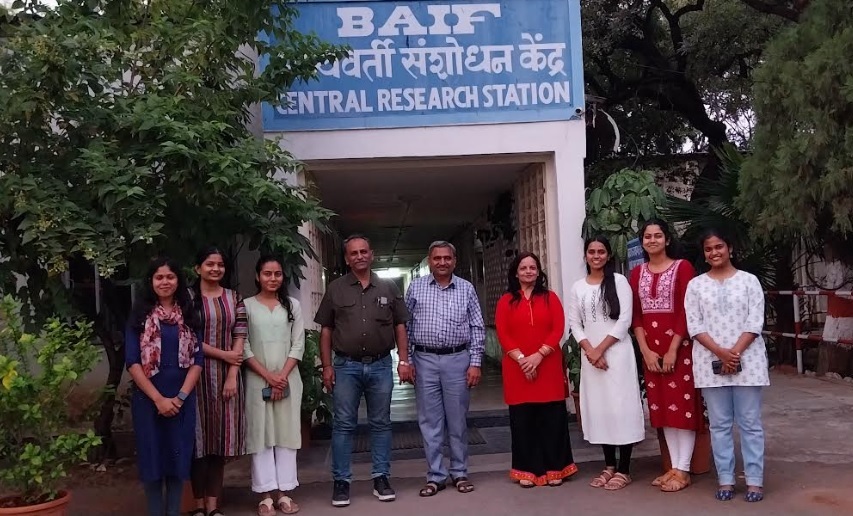
On this occasion, ‘Harit Dhara’, an anti-methanogenic feed supplement with methane emission reduction properties was introduced to the livestock fraternity.  Dr. Manoj Aware, Chief Thematic Programme Executive, Animal Nutrition & Climate Action, BAIF, highlighted the critical role of nutrition in livestock, methane emission mitigation strategies and contribution of ‘Harit Dhara’ towards a green economy.  A field exposure visit of 30 livestock owners to BAIF Central Research Station at Urulikanchan was flagged off on this occasion.


Adoption of Feed Additives for reduction in enteric emission by Ruminants

Adoption of Feed Additives for reduction in enteric emission by Ruminants

‘Harit Dhara’ is an anti-methanogenic feed supplement with methane emission reduction properties.  This carbon offsetting technology with its nature-positive benefits, was recently launched at the Godavari Cooperative Milk Union, Kopargaon, on June 21, 2023, on the occasion of the 19th death anniversary of the visionary leader of Western Maharashtra – Shri. Namdeo Parjane Patil, former Chairman of Godavari Khore Sahakari Dudh Utpadak Sangh Ltd., Kopargaon and a strong supporter of BAIF and its Founder – Dr. Manibhai Desai for livestock productivity improvement and reduction in environmental pollution.

On this occasion, this environmentally-beneficial feed supplement produced by BAIF, was distributed to a large number of livestock owners and milk producers from Kopargaon, Ahmednagar district and its neighbouring villages, in the gracious presence of Dr. Hemant Vasekar, Commissioner, Animal Husbandry, Government of Maharashtra, Dr. Sheetalkumar Mukane, Additional Commissioner, Maharashtra, Shri. Rajesh Parjane Patil, Chairman, Godavari Cooperative Milk Union and Mr. V.B. Dyasa, Regional Director, BAIF.  This formal launching ceremony highlighted the joint mission of various stakeholders such as BAIF,  Cooperative Milk Unions and the State Animal Husbandry Department in promoting nature-positive feed supplements with scope for improved livelihood and enriched environment.  Dr. Manoj Aware, Chief Thematic Programme Executive, Animal Nutrition & Climate Action, BAIF, highlighted the critical role of nutrition in livestock, methane emission mitigation strategies and contribution of ‘Harit Dhara’ towards a green economy.  Artificial Insemination Technicians associated with the livestock development programme of BAIF Maharashtra, were felicitated on this occasion for their significant contribution to sustainable livestock development.

A MoA signed in September 2022 between ICAR-National Institute of Animal Nutrition and Physiology (NIANP) and BAIF, has entrusted BAIF with licencing and commercial production rights of this Nature-positive feed supplement.

Combating Desertification, Promoting Carbon Neutrality and  Transforming Lives

Combating Desertification, Promoting Carbon Neutrality and Transforming Lives

Mr. Yogesh Sawant
June 17, 2023
Mr. Yogesh Sawant
June 17, 2023

Desertification, climate change and biodiversity loss are the key problems of sustainable development. Desertification is mostly caused by land deterioration. According to estimates, 120.4 million ha of India’s geographical area is degraded, of which 104.2 million ha is arable land, resulting in a loss of 5.37 to 8.4 million tonnes of soil nutrients (NAAS, 2021).

To address land deterioration and desertification, location-specific, socially acceptable, environmentally benign and cost-effective strategies need to be adopted. BAIF Development Research Foundation, an NGO working in sustainable development in 14 Indian states, has promoted the following strategies:

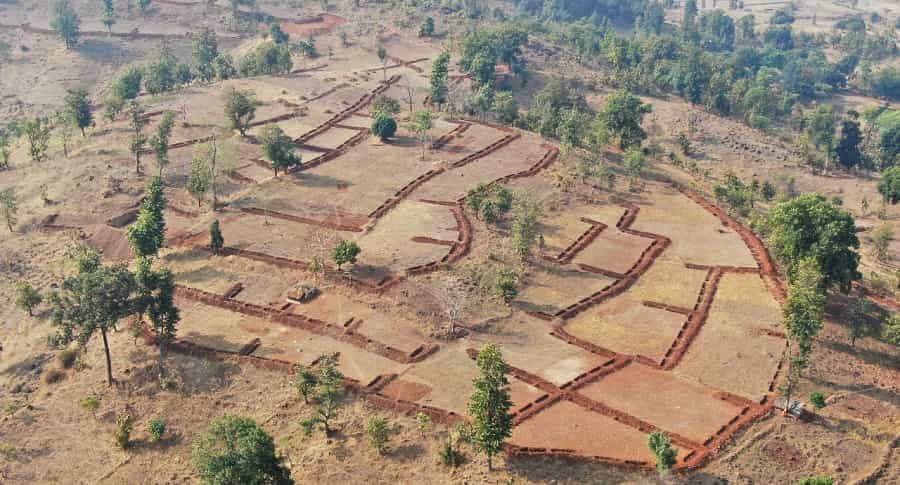
Wadi (Agri-Horti-Forestry System): Under this programme, fruit trees are planted as the main crops with vegetable crops and pilot-scale cash crops as intercrops on land owned by resource-poor families, for income generation, while forestry trees with multipurpose uses such as fodder, herbs, timber, NTFP and fuel wood are planted along farm boundaries. This model emphasises on the promotion of indigenous and local tree species. While the focus is on legume crops, efforts are also undertaken to identify local agro-biodiversity, purify, characterise and promote elite local landraces of main crops in the particular area.   The approximate tree density ranges from 750 to 950 trees per hectare. Site-specific appropriate soil conservation techniques and diverse organic practises such as green manuring, on-farm compost production and application and in-situ composting have helped in improving the physical and biological properties of soils.

To ensure the availability of water for consumption and protective irrigation, appropriate decentralised micro-water resources such as springs, group wells and check dams have been installed. Farmers are also organised into Farmer Producer Organisations for aggregation, processing and marketing of farm produce for value chain development. Improved quality of life of the participating families is ensured through the promotion of location-specific and need-based preventive health measures such as clean drinking water, improved nutrition, personal hygiene and sanitation and women and child health.

The Wadi programme has checked soil erosion and improved soil parameters. In addition to halting land degradation, the programme has resulted in increased livelihoods, resilience and nutrition. More than 2 lakh (0.2 million) families have adopted wadis, converting 35417 ha of degraded lands into sustainable productive assets while combating mitigation. More than 0.45 million families in 25 states have benefited from the Wadi approach adopted under the NABARD-supported Tribal Development Fund and with BAIF functioning as a Resource Support Organisation. Studies indicate that these wadis sequester roughly 23T C per ha over a period of 10 years.

Natural Resource Management: BAIF has also adopted several natural resource management and landscape development strategies. A comprehensive assessment of the current state of natural resources such as land, water and forests is followed by participatory planning and implementation of conservation and restoration measures. Based on the demand and available resources, several approaches such as watershed development, soil and water conservation, soil improvement, water management and silvipasture development have been implemented. The emphasis is on appropriate soil improvement practises such as the use of organic inputs and biochar, recycling of agricultural waste and low tillage practises. Specific measures are also adopted for the management of saline soils.

BAIF has promoted the IRESA programme, which uses cow dung to generate biogas with the resultant slurry turning into phosphate-rich organic manure (PROM) and serving as a rich source of nourishment for plants and replenishment of soils while substituting synthetic fertilisers.      

BAIF has already treated 3.6 lakh ha of land in 12 Indian states. These methods have slowed down land degradation, improved soil health and increased water availability, all of which have increased crop yield and fodder availability. This has resulted in surplus income for farmers and sustainable management of natural resources. Studies indicate that these strategies have also improved soil carbon while contributing to climate change mitigation.

These climate change mitigation strategies are ensuring the restoration of land, improving soil moisture, biodiversity, farm yields and resilience of small and marginal farmers while contributing to poverty alleviation and Nationally Determined Contributions identified by the Government of India.

Contribution to Sustainable Development Goals


Mr. Yogesh Sawant

Chief Thematic Programme Executive
Farm-based Livelihood and Climate Action
BAIF Development Research Foundation

Linkedin Profile

Triple Project – Watershed, Climate Change Adaptation and Mitigation Launch

Triple Project – Watershed, Climate Change Adaptation and Mitigation Launch

June 7 was an important dateline in the calendar of BAIF/BAIF Livelihoods and ACG Cares Foundation. On this day, under the joint CSR partnership, a watershed and spring shed development and Climate Change and Mitigation Project was launched at Zagalwadi village in Khandala block of Satara district of Maharashtra – one of the designated scope areas apart from Lohom, Limbachiwadi, Karnwadi and Ghadgewadi villages. 50 enthusiastic volunteers from the Shirval factory of ACG, Mr. Zakir Shukri, Plant Head, Mr. Umesh Patil, General Manager – HR, Mr. Sunil Kumar – Head – CSR, Mr. Sandip Jadhav, Administrative Manager, ACG Cares Foundation and Mr. Chandrashekhar Walke, CSR Manager were present on the occasion.  Driven by the desire to save Mother Planet from degradation, the volunteers took a pledge to plant 100 fruit and forestry plants with the mission of transforming barren land into productive environmentally sustainable plantations along with the village community.  The BAIF/BAIF Livelihoods team was represented by Dr. Rajashree Joshi, Programme Director, Mr. Sudhir Wagle, Chief Programme Executive, Mr. Waman Kulkarni, Chief Thematic Programme Executive, Mr. Mukul Baviskar, Additional Chief Programme Executive and Mr. Pankaj Katte, Project Officer.  The village display board inaugurated in the presence of the 270-strong village community, Gram Panchayat leaders and CSR partners, marked the launch of the project and the joint commitment to ensure a safe environment.

On World Environment Day, BAIF Pledges to step up its Carbon Positive Initiatives

On World Environment Day, BAIF Pledges to step up its Carbon Positive Initiatives

The Global Environment Community including the United Nations, has been setting targets to control global warming for saving the future generation.  However, the pace of temperature rise has accelerated unexpectedly due to over use of non-renewable energy sources because of which, climate change impacts are being faced by the present generation itself.  Thus, this current generation does not have any option before it to cut down on emissions and thereby ensure their own safe living on this planet.

At BAIF, we have strong and large-scale programmes to ride on and contribute to mitigation.   However, we need to gear up our efforts to contribute to carbon positive development. 

On the occasion of World Environment Day, let us ramp up our Carbon positive initiatives.

Bharat Kakade, President, BAIF

Nature-positive Initiatives demonstrated across BAIF

Nature-positive Initiatives demonstrated across BAIF

World Environment Day was celebrated by BAIF, its participant families and corporate partners across various locations through demonstration of various Nature-positive initiatives.

Madhya Pradesh:  Village cleanliness, tree planting and conservation were well demonstrated by enthusiastic village leaders and village community and also by the participants of the agri-horti-forestry (wadi) programme under the FDP Wadi Development Programme at Gopalpura and Dhamaniya Jali villages in Mandsaur district. The event was jointly organised by HDFC Bank under its Parivartan Initiative and BAIF.

School children and women Self Help Groups led the campaign for promotion of a plastic-free environment with the slogan “Beat Plastic Pollution – If you can’t reuse it, refuse it” at Berchha and Kalsi villages, Nagada, Ujjain district of Madhya Pradesh.  The participants undertook a tour of the entire village for spreading awareness among the village community and also took a pledge to stay away from bio-degradable wastes and thereby save Mother Earth.  The event was jointly organised by Grasim Jan Seva Trust and BAIF.

Maharashtra: A tree plantation drive was organised at Jawulgaon in Wardha district, with the active participation of school children and the village community.  Mr. R.K. Sharma, Head – Human Resources, Evonith Metallics Ltd., graced the occasion.  On this occasion, a women-led Turmeric enterprise was also inaugurated at Bhugaon, Wardha district, with the involvement of Pragati Self Help Group.

BAIF in association with Gulf Oil Lubricants India Limited, organised a plantation programme to symbolize the need to green degraded lands at Barwadpada, Jawhar in Palghar district in the presence of the Gulf Oil Silvassa Plant Head, Mr. Ankur Jain, HR team and CSR Coordinator, Hinduja Foundation, Mr. Benedict Poshapir.

Bihar:  Nature-positive initiatives such as tree planting and conservation drive and greening of village premises were launched at Dharhara, Munger, under the Holistic Rural Development Programme supported by “Parivartan” initiative of HDFC Bank with active participation of the village community.  On this occasion, a pledge was also taken to save and protect the environment and lectures on environmental protection organised to create environmental awareness on a large scale.

Nature-positive initiatives through tree plantation and plastic-free environment drives were undertaken at Kaprada in Valsad, Gujarat, Barmer and Gudalmalani in Barmer, Rajasthan, Kasira in Sundargarh, Andharikata in Anugul, Badaberana in Cuttack and Basiapada in Sambalpur, Odisha and suitable climate proofing measures were undertaken at Madakkal, Karadikkal, Manjugiri, Sulagunta and Arulnatham in Krishnagiri, Tamil Nadu and various other operational areas of BAIF.

Soil matters! Pathways to adaptation and mitigation!

Soil matters! Pathways to adaptation and mitigation!

Mr. Ravi Kote
June 05, 2023
Mr. Ravi Kote
June 05, 2023

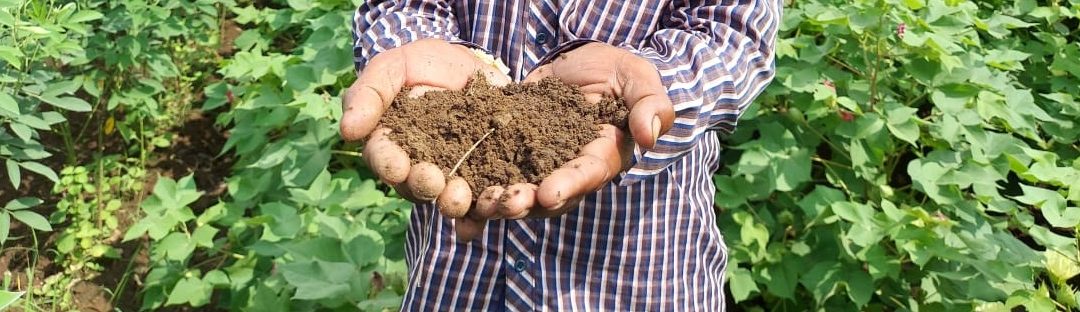
Soil is vital to human life as it impacts major ecosystem services such as food, water quality, groundwater, stream flow and soil erosion. Soil plays a very important role in supplying nutrients and favourable physicochemical conditions to plant growth, promoting and sustaining crop production,  providing habitat for soil organisms,  reducing environmental pollution,   resisting degradation and maintaining or improving human and animal health. The major challenges impacting the soil ecosystem are rainfed farming, high soil erosion and climate risks, and lack of understanding about soil health and low crop yields.  Land degradation worldwide is considered to be the major reason for low productivity. The current agricultural practices and climate challenges are causing soil erosion faster than the natural process of replenishment of soils. Estimates indicate that nearly 50 percent of the irrigated land in arid and semi-arid regions have some degree of salinization. As per Indian Council of Agricultural Research (ICAR) reports, the area under problem soils has increased from 220 lakh hectares (2005) to 243 lakh hectares (2010). This indicates that there is scope for improving the health of problem soils in India and sustaining it by creating awareness,  promoting regenerative practices, and monitoring for ensuring healthy and secure food and water,  carbon sequestration, a healthy environment, and an ecosystem. Sustainable soil health management contributes to Sustainable Development Goals 2, 3 6, 13, and 15.
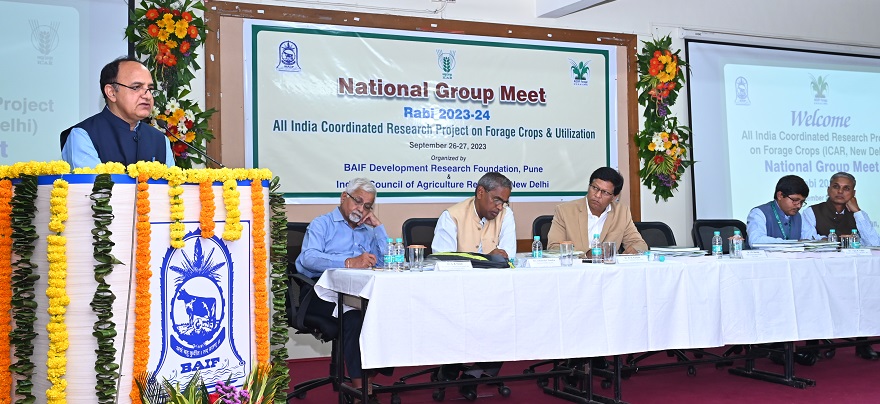
Soil Organic Carbon (SOC) is an important soil health indicator for its contribution to food production, climate change adaptation and mitigation. SOC can be lost as CO2 or CH4 can be emitted back into the atmosphere as eroded soil material or dissolved organic carbon washed into rivers and oceans.

Why is soil health important?

SOC management worldwide plays an important role in voluntary carbon markets as it is linked with carbon stocks. The turnover which may be in a few months,  years, or for an even longer duration, fetches carbon credits to farmers. The factors affecting SOC are climate- extreme events like drought, flood and rise in temperature, land use, vegetation, Hydrology (Water content) and Soil texture.

Practices to convert soil into net carbon sinks:

  1. Soil conservation measures such as contour bunds, vegetation/plantation/grass development on bunds, silvopasture, agroforestry, afforestation and forest conservation.
  2. Ensure proper drainage conditions in waterlogged soils, particularly in wetlands and rice fields which are the largest sources of methane emissions.
  3. Application of water in required quantity as well as quality.
  4. Integration of organic fertilizer and manure
  5. Use of vermicompost and biochar produced from unused crop residues and green manuring.
  6. Cover crops, crop rotation, and crop diversification.
  7. Integrated Pest Management.
  8. Supply balance plant nutrients based on soil tests and nutrient analysis.

Rambhau Wagh, a farmer from Parkhed village near Khamgaon, Buldhana district of Maharashtra, owns 1.2 ha land. He has always been encountering low productivity and high production cost. On realising the importance of healthy soils, he took up  vermicompost production  and sold the surplus  to  nearby farmers.

He established six beds of 3 x 1 x 0.75 m size to produce 0.25 tons/bed/cycle which is now fetching him  an additional income of INR 3500 per cycle.

Jyotiben Khatariya from Ambapur village in Gandhidham district of Gujarat was unable to cultivate her 5 acres of land due to high salinity. After observing the effect of   subsurface drainage  on others’ fields she replicated it on her land and was able to  fetch a good yield from cotton and mustard crops.

Burning of unused crop residue, a common practice among farmers in India,  contributes to carbon emission.  To address this issue, a Farmer Producer Organisation (FPO) established a biochar production unit which enabled farmers to sell their waste biomass to the FPO and  purchase biochar to apply it  on their fields. The FPO  was able to convert 100 tons of crop residues into 25 tons of biochar last year thereby   contributing to circular economy.

Likewise, the farmers in the Belikere watershed have a practice of using crop residues to improve the soil fertility and residue as mulch.

Thus, farmers not only contribute to Land Degradation Neutrality but also ensure food security through suitable  climate change adaption and mitigation strategies.

How can farmers be benefitted?

Selling carbon credits by adopting regenerative agriculture for carbon sequestration is now an opportunity for Indian farmers. Farmers can become carbon credit owners by managing soil health and use renewable energy for irrigation and home consumption.

  • Carbon Credit:One carbon credit certifies that one metric ton of carbon dioxide is removed from the atmosphere.
  • Carbon Markets aimat reduction in greenhouse gas emissions enabling the trading of emission units (carbon credits), which are certificates representing emission reductions.
  • Carbon Offsetting: Upfront support to farmers is helpful for claiming credits.
  • Benefits: The direct benefit to farmers is cash-based incentives for the carbon sequestered on their lands. On sequestering carbon equivalent to one carbon credit, farmers can earn approximately INR 800-1200 at current market prices which are likely to fetch a better price of INR 3,000-4000 in the near future.  There is potential to sequester one to four carbon credits per ha through the use of regenerative practices.  The indirect benefit is the improvement in soil health, increased water-holding capacity, lower soil density and increased water.
  • On boarding:  As individual farmer registration is not easy, farmers can be on board through farmer producer organisations or non-profits or commercial entities that provide related services.
  • Verification and Payments: Once the projects are listed, third-party agencies such as The Gold Standard, Climate Action Reserve, American Carbon Registry, Verra, SCS Global Services etc. verify the  After verification and approval, credits are sold in markets and the incentives are distributed to the FPO as well as to the farmers.

Mr. Ravi Kote

Chief Thematic Programme Executive
Natural Resources Management & Climate Action
BAIF Development Research Foundation

Linkedin Profile

Innovative farmer rolls out more recognised and registered upland rice varieties

Innovative farmer rolls out more recognised and registered upland rice varieties

Rice Varieties “Kirti ” and “Madhura “, developed by Mavanji Pawar, an innovative tribal farmer from Jawhar, Palghar District of Maharashtra, have been recognised and registered under Protection of Plant Varieties and Farmer’s Rights (PPV &FRA), Ministry of Agriculture & Farmer Welfare, Government of India.  “Kirti” variety is a short, bold and reddish-coloured upland rice which matures at 110-115 days, blast resistant and boasting of a grain yield of 10-15 quintals per acre.  “Madhura“ variety is a long and slender with good swelling quality, white-coloured upland rice which matures at 110-115 days, water-stress tolerant and with a  grain yield of 17-20 quintals per acre.

Kirti Rice Variety

Madhura Rice Variety

This innovative rice breeder had developed another upland rice variety – “Kamal” which was registered under PPV &FRA in the year 2022. This unassuming conservationist, a recipient of the Government of India-awarded ‘Plant Genome Saviour Farmer’ award 2012-13 also shared his experiences in rice breeding and conservation at the C-20 Conference held at Palghar in May 2023.   Mavanji is closely associated with BAIF and enjoys imparting hands-on training and guiding other farmers in conservation and protection of crop cultivar diversity under the Agro-biodiversity conservation programme being implemented by BAIF as a nature-positive initiative.