Celebrating the International Year of Millets

Celebrating the International Year of Millets

Feb. 26, 2023

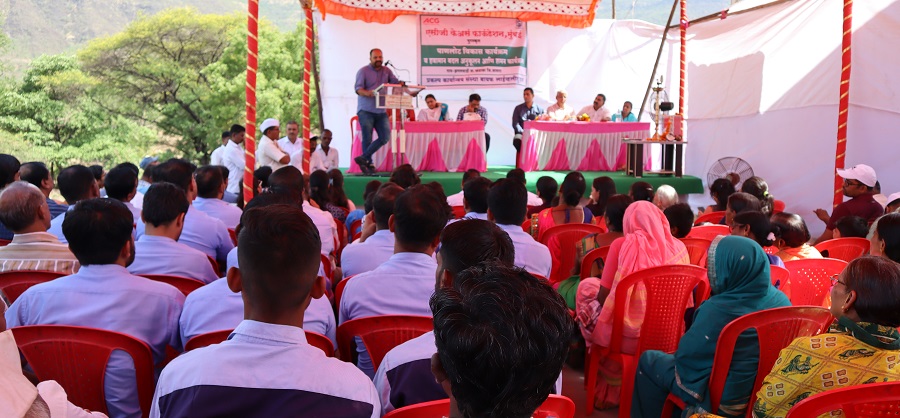
Unique, flavoured millet-based food preparations, knowledge session on millet crops and their role in nutrition and food security against the background of climate change, interactions with the tribal farmers and seed-savers were some of the key takeaways for 350 participants at the Pune Millets Festival organised on February 26, 2023 by the Department of Agriculture, ISKCON, Pune and BAIF as a part of the United Nations declared 2023 as the International Year of Millets. The Festival aimed at creating awareness and ushering in the goodness of millets into the palates of the general public. The festival was inaugurated by Mr Vikas Patil, Director – Agriculture, Government of Maharashtra in the presence of Mr. Sanat Kumar Das, Director, Govardhan Rural Development (Govardhan Eco Village) and Mr. Pramod Takawale, Programme Director, BAIF.

Mr. Sanjay Patil, Chief Thematic Programme Executive, BAIF, introduced the participants to BAIF’s work on Millet diversity in Maharashtra, its role in promotion and conservation of millets through community-led initiatives, traditional knowledge of tribal communities and research and extension activity undertaken in tribal clusters of Maharashtra. Grassroot millet conservators from various tribal clusters were felicitated on this occasion. Nutritional qualities of millets were discussed by Dr. Archana Thombre, Medical Officer, YASHADA while Ms. Meghna Shukla, renowned recipe writer, demonstrated simple but delectable millet-based recipes. Such festivals with collaborative effort will facilitate efforts to take millet diversity to the masses and in turn, ensure its conservation and value.

CSR Journal Awards received by BAIF MP and BAIF Gujarat

CSR Journal Awards received by BAIF MP and BAIF Gujarat

Feb. 25, 2023

BAIF Madhya Pradesh, is implementing the Resilient and Sustainable Agriculture Development Programme in partnership with Grasim Industries in Ujjain district of Madhya Pradesh. BAIF is also implementing the Gramsamruddhi Programme in partnership with NAYARA in Jamnagar and Dev Bhoomi Dwarka districts of Gujarat. These two programmes were announced 1st Runner Up and 2nd Runner Up at The CSR Journal Excellence Awards 2022 in the category of Agriculture and Rural Development. The awards were presented to BAIF and its CSR partners at the hands of Shri. Eknath Shinde, Hon. Chief Minister of Maharashtra at an award  ceremony held in Mumbai.

BAIF organizes Calf Rally and Competition of Milking Animals in Bundelkhand Region

BAIF organizes Calf Rally and Competition of Milking Animals in Bundelkhand Region

Feb. 24, 2023

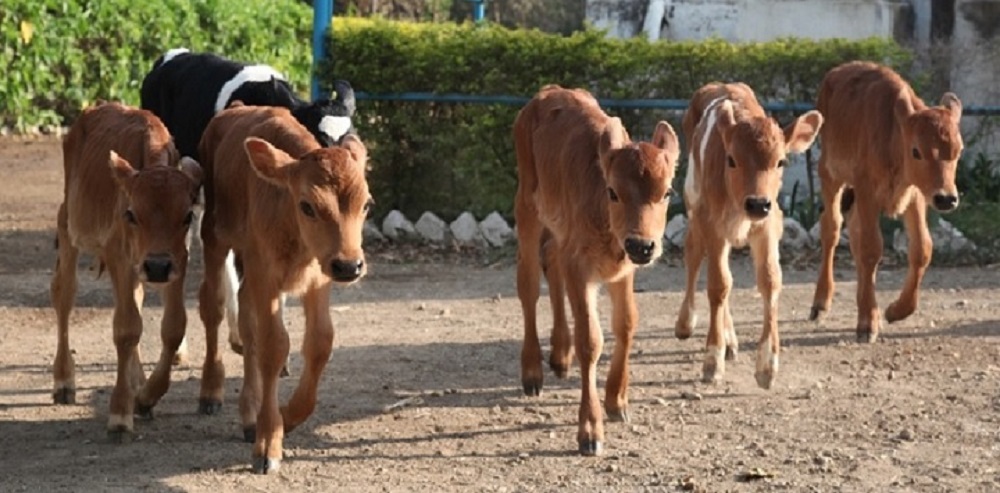
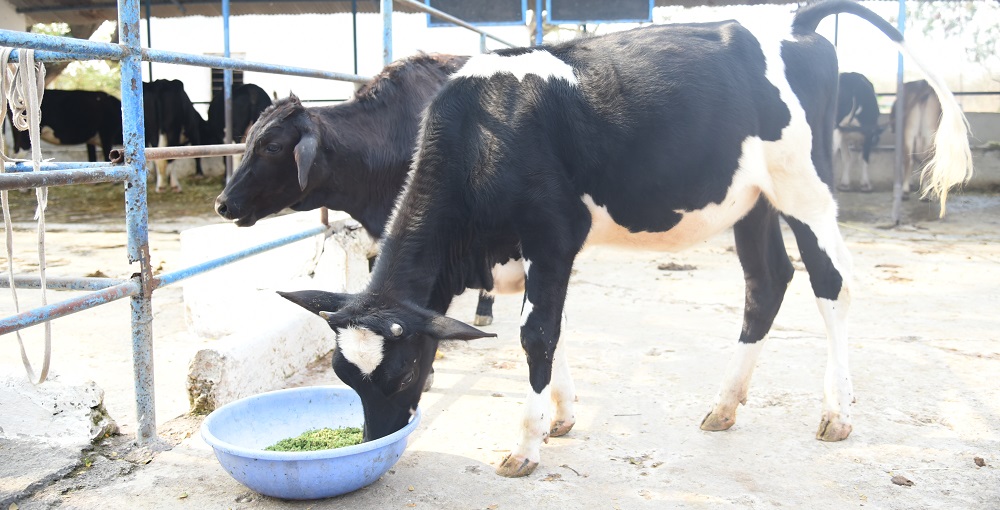
With a view to encourage dairy farmers in Bundelkhand region to raise milch breeds for better milk yield and profitability, BAIF organised a calf rally and competition of milking animals at Naadin Kurmiyan village in Chitrakoot district of Uttar Pradesh. The events received a very encouraging response from farmers from surrounding villages and more than 100 dairy animals participated in the calf rally and milking competition event.  The animals bred with BAIF-facilitated Artificial Insemination (AI) technique, underwent a milking recording assessment based on the evaluation conducted by a milk recording committee comprising of senior state dairy officials from Chitrakoot district.  During this evaluation, a Sahiwal breed recorded 9 litres of milk in one milking time.  This impressive record which has been brought about by BAIF effort, was appreciated by all the farmers and district officials present on the occasion and expressed that such was the impact of this programme, that a milk yield of 17-18 litres a day was also possible from improved dairy animals bred by farmers in Bundelkhand region.  They encouraged the dairy farmers to rear such improved breeds with better milk yield and income prospects. The programme was organised with the good support of Additional Director, Deputy Director and other senior district-level Animal Husbandry and Dairy Development officials.         

Launch of Integrated Livestock Development Programme in Uttarakhand

Launch of Integrated Livestock Development Programme in Uttarakhand

Feb. 23, 2023

The Integrated Livestock Development Programme for Hill Areas in Uttarakhand across 11 districts was launched in the presence of Shri. Ajay Bhatt, Hon. Minister of State for Defence and Tourism, Government of India, Shri. Saurabh Bahugana, Hon. Animal Husbandry Minister, Government of Uttarakhand, Dr. Prem Kumar, Director, Animal Husbandry Department and Dr. Rakesh Singh Negi, CEO, Uttarakhand Livestock Development Board (ULDB) at an awareness camp organized by ULDB under the National Livestock Mission at Sitarganj, Udham Singh Nagar district of Uttarakhand. BAIF demonstrated a live model of Integrated Livestock Development Centre which was appreciated by the dignitaries.

On this occasion, 62 Livestock Development Centres were flagged off digitally by Shri. Saurabh Bahuguna and green flags were waved to the Artificial Insemination (AI) Technicians who will be In-Charge of these centres. Dr. Raviraj Jadhav, Regional Director – BAIF-North, briefed the dignitaries about BAIF’s activities in Uttarakhand state and highlighted the invitation and overwhelming support which had been received by our Founder Dr. Manibhai Desai, from Shri. Hemwati Nandan Bahuguna, Hon’ble Chief Minister of Uttar Pradesh which had been instrumental in the launch of the Integrated Rural Development Programme of BAIF in Uttar Pradesh.

Blood Donation Camp organised at BAIF Pune Head Office

Blood Donation Camp organised at BAIF Pune Head Office

Feb. 07, 2023

BAIF Pune Head Office organised a Blood Donation drive in association with Janakalyan Blood Bank with the active participation of 109 volunteers from BAIF staff at the head office coming forward to donate blood of which, 83 qualified for donating blood for saving precious lives.

Best Project Implementing Agency Award for BAIF Madhya Pradesh

Best Project Implementing Agency Award for BAIF Madhya Pradesh

Feb. 04, 2023

For the third consecutive year, BAIF Livelihoods, Madhya Pradesh, received the “Best Project Implementation Agency (PIA) Award for successful implementation of the tribal development (wadi) programme being implemented in 36 villages of Satna district of Madhya Pradesh under the NABARD-funded Tribal Development Fund (TDF). The award instituted by NABARD Regional Office, Bhopal, has been awarded to BAIF for the years 2020, 2021 and 2022 respectively.

AI Technicians and Dairy Farmers felicitated by BAIF

AI Technicians and Dairy Farmers felicitated by BAIF

Jan 28, 2023

Outstanding Artificial Insemination Technicians (AITs) and Dairy farmers associated with the dairy development programme of BAIF across Maharashtra were felicitated by BAIF Maharashtra, in Osmanabad (Dharashiv). AITs from Osmanabad, Latur, Solapur and Parbhani districts were evaluated based on the number of AIs performed, updation of the MKrishi application, number of calves born and other data reporting parameters. Dairy farmers taking regular services from BAIF and having land holdings less than three acres, were evaluated for the Best Farmer Award based on improved income generation and farm management practices followed. The Best AI Technician Award as well as the HDFC Project “100 Sorted Semen AI” Award was received by Mr. Maruti Kudale, Parada, Osmanabad district. The Best BAIF Sustainable Model (BSM) AI Technician award was won by Mr. Ajit Katkar. The Best Farmer Award was given to Mr. Jalindar Dete from Rui village in Osmanabad district. 8 other AI Technicians and 3 other Dairy farmers were awarded second and third prizes in these categories. The award recipients were felicitated with cash and gift prizes, certificates and plaques. 106 AITs and 10 dairy farmers along with their families and 30 women farmers participated in this memorable event. Dr. Nishikant Bhangale, Associate Thematic Programme Executive, Mr. Mahesh Narode, Regional In-charge, Dr. Santosh Ekshinde, Senior Project Officer and other team members from BAIF Maharashtra contributed to the success of this  function.

Dr. Vikas Gapat, M. D. (Ayurveda), Dr. Mukund Taware, Livestock Development Officer, Osmanabad district and Mr. V. B. Dyasa, Regional Director, BAIF Livelihoods – West were the Chief Guests at the function. Dr. Taware provided valuable information about government schemes for the benefit of dairy farmers and urged farmers to take benefit of these schemes. Dr. Gapat shared tips for leading a healthy lifestyle. Mr. Dyasa elaborated on the aims and objectives of BAIF and the important role of the dairy sector in bringing about rural development and poverty alleviation.

BAIF celebrates 74th Republic Day

BAIF celebrates 74th Republic Day

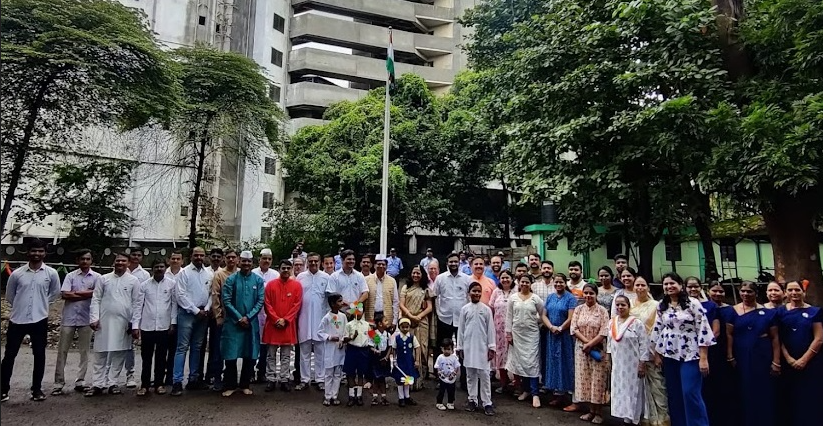
Jan 26, 2023: The 74th Republic Day was celebrated by BAIF Head Office in Pune and all other locations in 13 states with pride, enthusiasm and joy.

The national flag was hoisted by Mr. Bharat Kakade, President and Managing Trustee of BAIF at the BAIF Head Office in Pune today after a ceremonial guard of honour. In his Inaugural Address, Dr. Avinash Deo, Programme Organiser, BAIF, while lauding the effort to celebrate Republic Day for the first time at the Head Office of BAIF, acknowledged the supreme sacrifice of martyrs for love of their motherland and celebration of this historical day on which the Constitution of India written by the Father of the Indian Constitution, Dr. B.R. Ambedkar came into effect thereby marking the formation of the Indian Republic and the democratic rights of every citizen.  He appealed to the BAIF team across all locations to continue the mission of rural and tribal development which was the dream of the Founder of BAIF, Late Dr. Manibhai Desai.

Mr. Kakade in his Address, while appreciating the effort to celebrate Republic Day for the first time at the Head Office and which is already a practice at BAIF, Uruli Kanchan, reminded the BAIF team about their responsibility to continue to work for the development of the nation through development of Rural India, keeping the ideals of Manibhai Desai in mind. Celebration of Independence Day and now Republic Day by the Head Office, apart from the Foundation Day of BAIF, has set the tone for continuing our committed effort towards sustainable development of the rural poor, he concluded.

Dr. Alok Juneja, Vice President – Programmes and Livestock Development, Mr. Shrinivas Kulkarni, Group Vice President – Finance, Mr. Babasaheb Pakhare, Chief Thematic Programme Executive and many members of the BAIF Pune team were present on this joyous occasion which instilled in everyone, a feeling of kinship and the desire to contribute in some way towards nation building.

Workshop on Livestock Genomics

Workshop on Livestock Genomics

Jan 23-25, 2023: A three-day workshop on “Application of Genomics in Animal Breeding and Health” was held from January 23 to 25, 2023 under Phase II of the Enhanced Genetics Project sponsored by Bill and Melinda Gates Foundation in Pune.  The Workshop was organized by Department of Animal Husbandry, Dairying and Fisheries, Government of India and co-organised by National Dairy Development Board (NDDB), ICAR-National Bureau of Animal Genetic Resources (NBAGR), National Institute of Animal Biotechnology (NIAB) and BAIF Development Research Foundation.

The workshop aimed at concretizing the genomic selection implementation in the field for the dairy sector. The discussions tried to provide answers to certain grey areas and evolve systematic and comprehensive guidelines. A concrete plan of action for the next five years was derived through a process of consensus and expert validation, involving national and international experts and other stakeholders across the dairy sector.

Chief Guest Shri. Rajesh Kumar Singh, Secretary, Department of Animal Husbandry, Dairying and Fisheries, Government of India (GoI), inaugurated the workshop in the presence of the Guests of Honour Dr. Abhijit Mitra, Animal Husbandry Commissioner (AHC), GoI, Shri. Meenesh Shah, Chairman, NDDB, Dr. Bishnu P. Mishra, Director, NBAGR, Dr. Ashish Lele, Director, National Chemical Laboratory, Pune and Dr. Pramod K. Rout, Additional Director General, ICAR. The Round Table discussions on the second day was chaired by Dr. Abhijit Mitra, AHC.

Dr. Abhijit Mitra
Animal Husbandry Commissioner

Shri. Rajesh Kumar Singh
Secretary, DAHDF, GoI

Decisions at the Government of India level to take Genomic Application in the field at PAN India level were taken in consensus with the workshop participants who comprised of scientists from International Universities / Institutes, National Research Organisations, State Government officials and representatives of Dairy Cooperatives.
Workshop on Application of Genomics in Animal Breeding and Health

Workshop on Application of Genomics in Animal Breeding and Health

Inaugural Session Highlights

Jan 23, 2023: BAIF has been engaged in breed improvement programme since the last 55 years, right from piloting and providing breeding services at the doorsteps of farmers to extending the programme across the country through various government departments and institutions, stated Mr. Bharat Kakade, President and Managing Trustee of BAIF in his Welcome Address at the Inaugural Session of the three-day workshop on “Application of Genomics in Animal Breeding and Health” organised by the Department of Animal Husbandry, Dairying and Fisheries, Government of India in Pune with BAIF, National Dairy Development Board, ICAR- National Bureau of Animal Genetic Resources and National Institute of Animal Biotechnology as co-organisers.  However, inspite of the good efforts of Government departments like NDDB and several cooperatives, issues such as production efficiency, degradation of genetic stock, challenges of diversity in terms of the environment in which breeding and rearing of livestock happens in India continue to besiege this programme, he lamented.  Accuracy in data recording, data gathering and data analytics is another challenge, he further added. He further cited the example of the initiative of the Government of India whereby a Consortium of NDDB, BAIF, NBAGR and NIAB is already working in this direction. Closer collaboration synergy from ground to apex level, one of the aims of this workshop, can result in optimisation of the data generated so far.  Certain new triggers are also expected to be generated which will in turn enhance animal production efficiency rapidly. Small and medium dairy farmers will benefit through this effort as livestock development is the major source of livelihood in India, he concluded.

Mr. Rajesh Kumar Singh, Secretary, Department of Animal Husbandry, Dairying and Fisheries, Government of India, defined the focus of his Keynote Address as setting out micro-economic, the policies and the institutional context in which the dairy sector is working in India.  The dairy sector in India has been growing since last 5 years at 7.5% CAGR and is the economic lifeline for almost 100 million rural households while also being India’s largest agricultural commodity. As it is a small holder system, it requires certain unique intervention strategies to address its challenges specifically which were to limit the population growth of the world’s largest livestock population while simultaneously improving its animal productivity particularly in the context of climate change. In terms of policies, the Government of India in this sector is involved in breed improvement programme which was traditionally AI but is now focussed on better technologies such as Embryo Transfer, IVF and hopefully application of genomic technology as well.  On the animal health aspect, the Government of India has rolled out the world’s largest vaccination programme – the FMD programme while tagging all our bovine population in the country with a unique number and uploading on our digital portal.  The Government of India’s National Digital Livestock Mission is in its pilot stage and the idea is to provide data-based services to our farmers and to all the other stakeholders.  This progamme is being implemented with the help of Tata Consultancy Services and the pilot programme is being rolled out in 4 districts of Uttarakhand and the intention is to roll it out across Uttarakhand in March and nationwide in April.  Combined with this, is the roll out of mobile veterinary units in all the states across the country and thereby provide farmers the incentive to use the portal more and more as well as use of the overall national mission called “One-health” which is in the final stages of being launched in the country and with focus on three verticals namely wildlife, livestock and human health. During the G20 meetings which India is incidentally chairing in different parts of the country, the Government also hopes to roll out the broader animal-pandemic preparedness on the G20 platform. There is a need to focus on the genetic improvement of our bovine population. There is also a need to develop a single-genomic-based dairy genetic improvement programme.  Under the Government of India scheme including the National Livestock Mission as well as the Rashtriya Gokul Mission we will try to provide support in the form of research and application in the field.  The genetic composition of the bovine population needs to improve in the context of climate change.

Dr. Abhijit Mitra, Animal Husbandry Commissioner, Government of India, referred to Urulikanchan as a centre of pilgrimage for animal genetics and breeding in the country. Considering the huge livestock diversity in the country, increasing livestock productivity could be a challenge and further stated that genetics and environmental interaction play a significant role in a country like India. He also focussed on the endemic diseases in the country and the huge livestock population which is naturally disease-resistant or disease-tolerant and also heat tolerant.  Data recording was the other challenge he expressed and hence, a very robust model which can take care of environmental variation, phenotypes and other traits or influencing parameters was required.  He mentioned the collaboration with NDDB in launching the National Digital Livestock Mission with an aim of collecting data from the field and Rashtriya Gokul Mission which was launched last year and appealed to the participants to practice inclusion and include all stakeholders involved in data recording.

Mr. Meenesh Shah, Chairman, National Dairy Development Board (NDDB), mentioned the scope of Artificial Insemination, advanced reproduction technologies such as sex-sorted semen and Embryo transfer and scientific selection of bull mothers in the genomics application programme while sharing that many stakeholders in the country were well aware of the potential of genomic selection for genetic improvement of bovines. NDDB and BAIF along with other partners have a significant recording of animals, he stated and further highlighted the pioneering effort of NDDB in genomic selection of crossbreds and indigenous animals which has resulted in more than 35,000 animals being genotyped and creation of a reference population. He also highlighted the INALF platform and NDDB-BAIF-NBAGR consortia for genotyping chip development and expressed hope of the discussions accelerating the implementation of genomics selection in smallholder dairy farming systems.

Dr. B.P. Mishra, Director, National Bureau of Animal Genetic Resources (NBAGR, expressed satisfaction about the fact that as a research fraternity, we have grown in the last two decades and we are ready to face the challenges to improve animal productivity while capitalizing on genetic tools. He also informed the gathering that India has a diversity of 212 registered breeds and that India was a unique nation as it has evolved a system to recognize its own animal genetic resources, document, characterize and register it and with gazette notification as a safeguard from IPR and India is now leading the Asia-Pacific region in this aspect. Breedwise survey undertaken in 2013 was a feat accomplished by the DAHDF.  In 2019, the breed wise survey expanded to 184 breeds and today in 2022, we have the second report of breed survey which provides scope to update our data in domestic animal diversity. In our challenge to improve per animal productivity, various molecular tools have been applied by IVRI, NDRI, NDDB, BAIF, NIAB and NBAGR.

Mr. Alkesh Wadhwani, Director, Poverty Alleviation, Bill & Melinda Gates Foundation (BMGF), highlighted the long association of BMGF and BAIF.

Dr. P.K. Rout, ADG, ICAR, stated that Pune was very closely associated with the history of Animal Science as the Imperial Ecological Laboratory was established in Pune in 1869. He expressed hope that the workshop would address the requirement of protein which was the biggest challenge of humanity and our country in particular with its alarming cases of malnutrition and hunger and this programme of genome-based application in animal breeding and enhancing genetic selection response would enable us to increase our milk production. And called for development of the livestock production system with genome-based application and called for a blueprint of the implementation plan as one of the outcomes of this workshop.

Dr. Ashish Lele, Director, National Chemical Laboratory, Pune, highlighted the interface between chemistry and biology and stated that one such interface was in the area of animal husbandry and establishment of the new generation sequencing facility at NCL which can be of help in the animal husbandry area and shared their research protocols by which the pathogens from this disease can be quickly and cost effectively tested and diagnosed in cattle research on Lumpy skin disease for cattle

Dr. R.O. Gupta, Senior General Manager, NDDB, proposed the vote of thanks.

BAIF Niger Crop Promoter Felicitated at International Conference

BAIF Niger Crop Promoter Felicitated at International Conference

Jan 17-21, 2023: Milubhai Thakrya, Senior Programme Operator, BAIF, Kaprada, has been associated with the Gujarat Tribal Development Programme in general since last 27 years and holistic village development programme in particular.  Milubhai was felicitated by ICAR-Indian Institute of Oilseeds Research and Indian Society of Oilseeds Research at the International Conference on Vegetable Oils (ICVO 2023) held in Hyderabad from January 17-21 for his significant contribution to the popularisation of  Niger oilseed crop among tribal families.  Milubhai, was nominated by Niger Research Station, Vanarasi, for his committed effort to motivate the tribal farmers of Kaprada and Dharampur regions of Valsad district to adopt improved cultivation practices of Gujarat Niger-3 variety.  The BAIF family is proud of him and his achievements.

Harnessing Biomass in Rural India for Bioenergy and Livelihood creation

Harnessing Biomass in Rural India for Bioenergy and Livelihood creation

Jan 13, 2023: “Biomass needs to be seen as a resource as it can provide socio-economic benefits to the farming communities”, stated Mr. Dinesh Jagdale, Joint Secretary, Ministry of New and Renewable Energy (MNRE), Government of India, while delivering the Keynote Address at the one-day workshop on creating a Bioenergy Digital Marketplace jointly organised by MNRE, GiZ, BiofuelCircle and BAIF Agro and Bio-Technology Pvt. Ltd. and hosted by BAIF at its head office in Pune on January 13, 2023.

There are 54 different kinds of biomass resources available in surplus in various states which can help in turning industries green while meeting the energy needs and reducing our dependency for energy supply. The digital change and connectivity taking place in the world and reaching every household in every village in the country, need to be embraced.This workshop is an opportunity to connect Farmer Producer Organisations, Entrepreneurs and Industries who can create a demand, he further expressed. 

Standardisation of biomass by the Indian Institute of Bioenergy at Kapurthala, can consolidate India’s position and leadership in the world. With its 170-odd gigawatt capacity-installed non-fossil fuels, India is almost fourth in the world in the domain of renewable energy, he further added. 2030 – the decade of action, will continue to register a rise in the use of renewable energy and bioenergy. Showcasing biomass through a digital market place by BiofuelCircle is bringing real value to rural entrepreneurs, Mr. Jagdale concluded.

“Connecting agriculture and rural India is the basis of the BiofuelCircle Model”, stated Mr. Suhas Baxi, Co-Founder and CEO, BiofuelCircle, Pune. If India has to become an energy exporting economy, it needs to harness the biomass. He listed out the reasons for the poor response towards biomass enterprise – small landholding, high cost in collecting biomass, less economic feasibility, farmers not receiving much in the supply chain and the seasonality aspect which requires storage. If industry is the buyer, small rural business is the key and hence, the model proposed, can surpass all these constraints. This model has created a briquetter-pellet manufacturer which can locate rural storages and the latter can sell biomass and bio-refineries to mining sites and industries which require biomass. 20 such biomass banks are being set up in rural Maharashtra in association with GIZ and BAIF, he added. These efforts are creating economic activity and employment in rural areas, he further added. More than 300,000 tons of biomass are available for sale and the price discovery and quality delivery are assured, he expressed.

Mr. Bharat Kakade, President and Managing Trustee, BAIF, a partner in this bioenergy digital marketplace, while welcoming the participants, stated that BAIF was a suitable agency to host such a programme and carry it forward due to its vast experience across 100,000 villages in 325 districts of 13 Indian states and helping 4 million families. He highlighted the core mission of BAIF which is to provide gainful self-employment to large sections of rural communities in their own areas thereby reducing distress migration. The major programmes of BAIF viz. Agri-horti-forestry (Wadi), Livestock development, Watershed Development and Renewable Energy are climate smart, reduce carbon footprint and create local employment opportunities. He also mentioned the Integrated Renewable Energy and Sustainable Agriculture (IRESA) programme for promoting biogas with filter to produce slurry cakes, with which either vermicompost or Bio-PROM is produced thereby replacing chemical fertilisers. In the context of emerging national and global challenges pertaining to climate change, he emphasised on the need to bring circularity in farming through an integrated approach of livestock-soil-crop-bioenergy management. There is huge potential in India for using crop residues fuel in the industrial boilers to replace conventional coal through a value chain approach. In collaboration with BiofuelCircle and with the support of GiZ, BAIF has made its foray into bioenergy production and the initial results look promising, he added.

Ms Nidhi Sarin, Programme Head, Access to Energy in Rural Areas, GIZ, stated that GIZ was happy to have appropriate partners like BiofuelCircle and BAIF and able guidance of Mr Dinesh Jagdale, Joint Secretary, MNRE, for their Bioenergy initiative. While supporting biomass-based briquette projects, GIZ had realised the demand-supply gap and disconnect of producers and consumers. This disconnect was addressed by BiofuelCircle by developing an online market place. Thereafter, GIZ, BiofuelCircle and BAIF came forward with the support of MNRE for pilot testing solutions in Maharashtra, resulting in this workshop. Biomass can be the key to meeting India’s climate targets and the new policy developed by MNRE highlighting the availability of surplus biomass, has tremendous potential for energy production, livelihood generation, income creation and empowerment of women. She highlighted the three models that may provide solutions to the challenge of crop residues namely, National Agriculture Market (e-NAM), a society-led model and the model being piloted by BAIF and BiofuelCircle which takes both demand and supply sides into consideration and can be the answer to the problem of crop residue burning. A larger meeting is in the offing for follow up and upscaling of this initiative, she further stated.

Dr. Mahesh Kadam, VAMNICON, highlighted the need to have a four-pronged approach towards capacity building focussing on production, consumption, distribution and biofuel exchange. Dr. Rajashree Joshi, Programme Director, BAIF, highlighted the emerging area of renewable and green energy in BAIF with special focus on solar, improved biogas, agri-residue-based energy options as a part of BAIF’s initiative in transitioning to a circular and climate-resilient rural economy. The demand for biomass for soil enrichment and cattle feed was also highlighted.  

Mr. Girish Sohani, Principal Adviser and Trustee, BAIF, in his concluding remarks at the inaugural session, highlighted the need to create a vibrant bio economy in rural areas using biomass-based enterprise and business development opportunities and welcomed the partnership and support from MNRE for piloting such initiatives.

Mr. Tushar Lowalekar, Founding Member and Chief Business Officer, BiofuelCircle, highlighted the significant movement towards use of biomass and bioenergy and the opportunity in the farm sector for collective participation of FPOs and farmers in this space, demand for 125 metric tons of biomass and lamented the challenges of collection, transportation and access to market which has led farmers to burn agricultural waste. He also stated that out of the registered 16,500 FPOs, only 4000 are organised and highlighted the BiofuelCircle model with its focus on participation at FPO level with aggregation, briquette making and value for rural entrepreneurs. 
Mr. Satish Chinchalkar, Adviser, BiofuelCircle and Mr. Mayur Sarode, Associate Programme Manager, BAIF provided an overview of the Unfolding green potential through agri-waste management (UGAM) project being implemented jointly by BAIF and BiofuelCircle in 11 districts of Maharashtra with the support of GIZ.     

Mr. Vikram Dhaka, Senior Scientist, MNRE, highlighted the scope of the user-friendly new Bioenergy Policy launched in November 2022 to support energy recovery from bio-resources. He also mentioned that, India has already achieved its target of 10 gigawatt installed capacity of biomass-based power generation before its deadline and expressed that the time had come to prepare for scaling up manufacturing of biomass-based briquettes.
Mr. Pradeep Bhargava, industrial management expert and Member, Advisory Board, BiofuelCircle, headed the Panel Discussions on Policy Intervention and Accelerators for Bioenergy Supply Chain. He called upon all the stakeholders to find a solution and to take the lead with an aim of socially responsible service and not social service. Mr. Sohani stated that this initiative was scalable and called for a biomass-based value chain from consumer point of view, standardization of the bands of value and quality assurance. Mr. Ashish Vaishnav, Director, Gangotree Energy Projects Pvt. Ltd., called for embedding quality circle and to develop suitable applications while keeping the environment in mind. Mr. Shrinivas Kulkarni, Director of BAIF Agro and Bio-Technology Pvt. Ltd. and Group Vice President, Finance, BAIF, emphasised on the need for government support in the form of regulations and a comprehensive framework to support the bioenergy sector. He also highlighted the importance of considering environmental challenges and alternative sources of fuel and urged stakeholders not to rely solely on government subsidies but to also take a look at the sustainable and effective model already being built by BAIF and BiofuelCircle, which will also contribute to the environmental, social and governance (ESG) metrics. Mr. Sachin Kamble, DGM, NABARD, highlighted the business opportunity through FPOs in setting up a briquette plant. Dr. Mahesh Kadam, Asst. Professor, VAMNICON, reiterated the resource management through aggregation, awareness and marketing aspect and the livelihood management aspect of this enterprise.    

Mr. Srirang Chorage, Torna FPO, shared the ground experience of his FPO in biomass aggregation business. He further mentioned that the transportation cost constituted a higher proportion of the overall selling price of biomass thereby reducing the farmer and FPO profit margins. If the transportation cost could be reduced, it would definitely help this sector to grow in future, he expressed. Prof. Suvarna Gokhale, Jnana Prabodhini, expressed the need for capacity building at the grassroots. 

Mr. Hemant Mohagaonkar, Executive Vice President, Thermax, as Panel Leader for the Panel Discussions on Supply Chain Conundrum, highlighted the seasonality of biomass as a serious concern, transportation and the need to add economic value at every stage. The panelists included Mr. Vikas Mhetre, Managing Director, Shree Industries who operates a briquetting plant, Mr. Mahesh Kambli, Director – Business Development, BAIF Agro and Bio-Technology Pvt. Ltd., Mr. Ram Phalke, Director, Panand Agro and Mr. Mirick Gogri, Head, Aarti Indutries. The panelists spoke about the need to work on the ground, need to ensure economic benefits to the farmers, importance of working capital, policy support, finance and seed support apart from value stream innovation, circular economy and to provide incentives to enable farmers to earn.      

In his concluding remarks, Mr. Suhas Baxi, reiterated the need for integrating a network of organisations and individuals with thought leaders for a more vibrant circular economy and the need for value discovery and demystification of biomass. 

60 representatives from farmer producer organization companies, women farmers, NGOs, Government Organisations, industries and NABARD participated in the workshop.  BAIF has been working on this theme which is an emerging development area. In the light of climate change and circularity, BAIF has development meaningful partnerships and supports innovations which are aligned with its mission of sustainable livelihood opportunities in rural India.  The workshop has set the direction to promote local initiatives in rural India to identify underutilised bio resources and to develop suitable infrastructure to make efficient use of these neglected resources for generation of green energy at an affordable cost, additional rural employment and for keeping the rural surroundings clean.