Wadi inspires Others

Wadi inspires Others
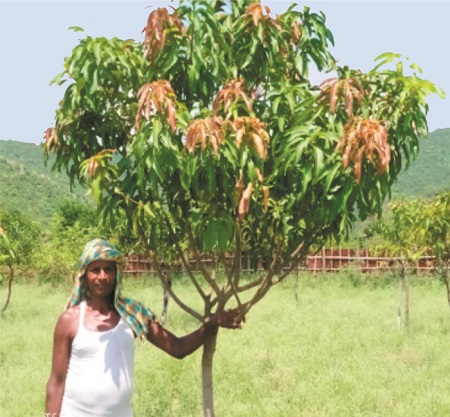
Philips Hembrom from Barmanni village, Munger, struggled to support his large family comprising of his wife and five children from mining activity.

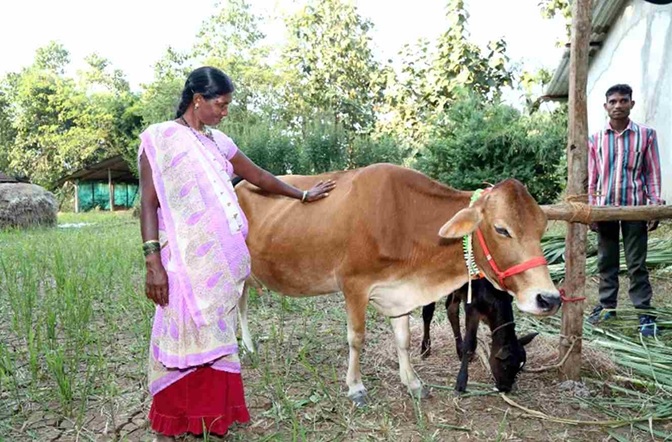
He joined the wadi programme. His wadi comprises of mango, jackfruit, guava and papaya and vegetable crops such as Bottle gourd, Ladies finger, Bitter gourd, Ridge gourd, pulses and mustard. With the income from wadi, Philips purchased two cows.

 His wife is a member of the SHG formed by BAIF and she makes 300 leaf plates per day which fetch her INR 64,800 in six months. The total annual income of the family from wadi, sale of milk and leaf plate making is INR 1.34 lakhs (0.134 million).

His stable income has enabled him to fund his son’s higher education at a private college in the nearby city of Bhagalpur. He has also been able to ensure the marriage of his 4 daughters. However, Philips feels that his singular achievement has been the addition of another 44 community members in wadi cultivation.

Organic farming for a better Future

Organic farming for a better Future

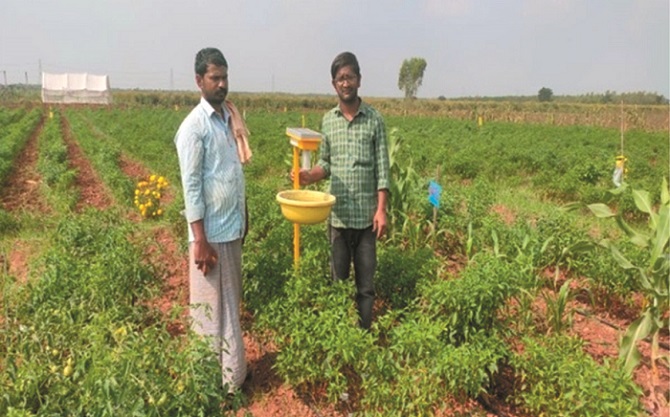
Yennaram Prameela is a sprightly 50-year old woman farmer from Machireddypally village of Sangareddy district who has been engaged in farming along with her husband since the age of 25. A keen believer in modern agricultural production technologies, this bold woman approached the field team of the Microsoft-supported Jaivik Mitra Project in 2019 and adopted advancedorganic vegetable cultivation practices such as Jeevamruta unit, vermicompost units, crop rotation and automated micro sprinkler irrigation system. Today, with advanced agricultural technologies, she is able to cultivate multiple varieties of vegetables in her 1.2 ha of land.

Her income increased by 35% by adopting improved sustainable farming technologies. With project support, she was able to supply her farm fresh vegetables to organic stores in Hyderabad with 10% extra premium price compared to the normal market price. Prameela foresees a bright future in organic farming.

Adoption of Natural Farming

Adoption of Natural Farming

Farmers of Purimetlu village in Mundalamuru Mandal in Prakasam district including Umareddy Venkateswara Reddy, had never grown any crop other than tobacco and chilli due to low groundwater table.

The Agri Business Centre established in the village enabled them to hire water pipes for critical irrigation which also improved their crop yield. Umareddy adopted zero budget natural farming. He dug a pond and adopted drips and sprinklers, while adding cow dung and urine to improve soil fertility.

In convergence with the Agriculture Department, he made use of crop protection measures. He was also advised to plant trap crops such as castor, marigold and establish border plantations of millets such as jowar and bajra. With these plant protection measures, his yield from cash crops, millets, vegetables, trap crops and fruit crops improved along with enhanced income.

The bio-diversity on his farm is evident. His daily earning is on an average INR 1500 a day and is a source of inspiration for enthusiastic farmers eager to change their fortunes.

From Vulnerability to Sustainability

From Vulnerability to Sustainability

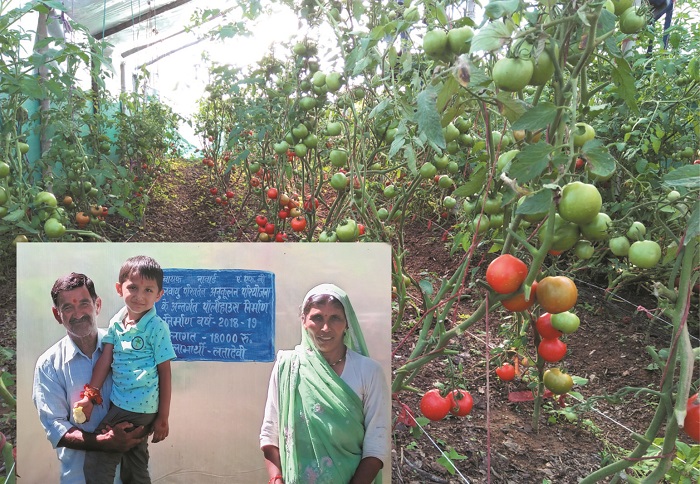
Six years ago, Lata Devi from Manar village in Lohaghat, Champawat, was clueless about climate-smart interventions. With the entry of BAIF into her village, she shifted to protective cultivation in low-cost bamboo polyhouse. She was trained in nursery raising and spacing of crops inside the polyhouse which enabled her to take up production thrice a year. She adopted roof top rainwater harvesting and gravity drip irrigation. The shift from local cultivars to high value vegetables such as capsicum, tomato, cabbage and cucumber fetched an attractive price at the local market in July-August when similar produce from plain areas were still not available in the markets. A certain quantity of the produce is kept aside for consumption by the family. The average Income/year/family owning one animal and one poly house of 60 m2 has been INR 30,000 from protective cultivation and INR 50,000 from milk production. Additional Income is also generated through nursery raising activity. Sustainable livelihood is now a reality.

The Winners

The Winners

Rajabai and Sonabai from Majhgawan block of Satna district received the First and Second Best Farmer prizes for establishment of wadi on 0.4 ha land under the Tribal Development Fund of NABARD.

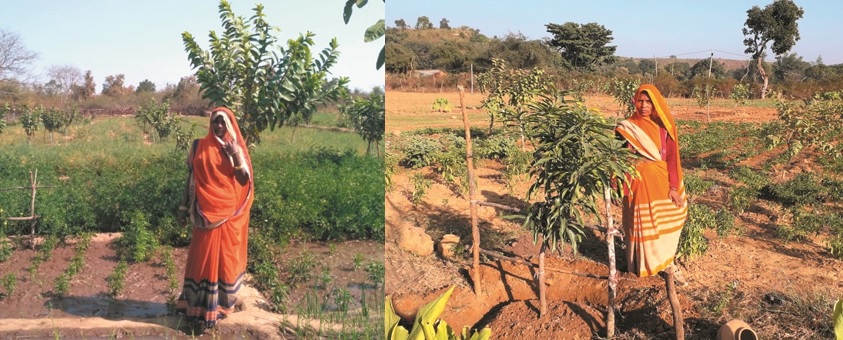
Life for Rajabai Gond of Chithara village, was a struggle after the death of her husband. Sonabai from Devlaha village was forced to migrate with her husband to support the family. To transform their lives, both of them joined the wadi programme whereby they planted 10 plants of mango, 20 plants of papaya, 30 plants of anola and 200 karonda saplings on 0.4 ha. Seeds of seasonal vegetables crops such as pea, tomato, brinjal, gourd, bitter gourd, onion and moong were distributed to them as intercrops. Deepening of well by a group of neighborhood farmers led to protective irrigation of their orchards and year-round vegetable production. To protect their orchard from wild animals, they erected a barbed wire fence. From an earlier annual income of INR 20,000, they started earning INR 250 to INR 300 every day by selling vegetables. They are now able to access information on various Government schemes and their benefits for improvement of their wadi. Rajabai and Sonabai have inspired many other women farmers who now consider wadi as their hope for the future.

Desert-based Livelihood

Desert-based Livelihood

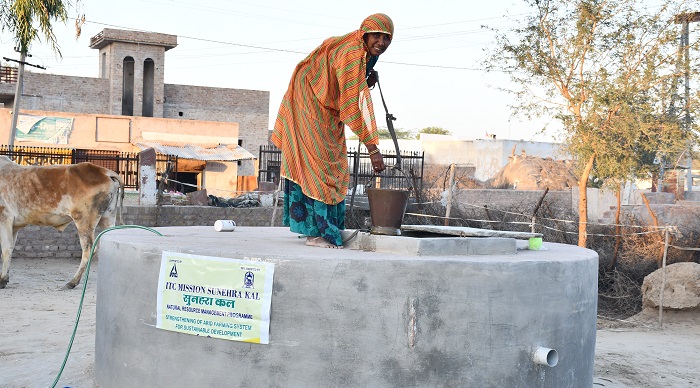
Earlier, women in Lunkaransar block in the desert region of Bikaner had to travel 4-6 km every day in search of drinking water. To address this critical issue, two Tankas of 30,000  litres capacity each , were constructed under the ITC Mission Sunehra Kal Project. With this benefit, the families are consuming the water which to them tastes like nectar as well as for theirbanimals . This water conservation structure while reducing the hardships of women is also ensuring protective irrigation to their wadi plantations and enabling them to devote some time to wadi development. Desert development has shown the families the road to development.

Role model in Pratapgarh

Role model in Pratapgarh

Krishna Gautam, a 35 year-old scheduled caste woman from Ashipur village in Pratapgarh district, started out as an Employment Guarantee Scheme worker. After enrolling at the Adult Literacy Centre operated by BAIF, she started teaching at an English medium school in Pratapgarh at a monthly salary of INR 4500.

Under the Gram Shakti initiative of CRISIL Foundation and through the Self Help Group at her village, she completed a Learning Management System module on banking facilitation and today, as a bank facilitator, she earns INR 9000 per month. She also provides doorstep services to the elderly.

With the encouragement of her husband and sons, she also enrolled for the Bachelor of Education Programme last year and will be appearing for the final semester exams this year. She and Shanti Mishra from BAIF who facilitated this programme, have transformed the lives of women in Pratapgarh district.

Empowering Self and Others

Empowering Self and Others

As a participant of the Prerna Project, Mangalagowri Akka learnt about improved agriculture practices, organic farming practices such as Integrated Nutrient Management, Integrated Pest Management and System of Rice Intensification Techniques.


Prior to the intervention, she was growing only Ragi, Cow Pea and a few vegetables. Today, she is growing crops such as Tur, Ragi, Cow Pea and leafy vegetables after realizing the significance of Crop diversification.


As a Champion Woman Farmer, she has encouraged almost 40 other women farmers in her area and has also been honored with the Best Women Farmer at taluka level by the Agriculture Department.


  • Before intervention Income was Rs. 80,000/annum
  • After intervention: Income is Rs 1,70,000/annum
  • (112.5 % increase in income)


Her livestock assets have also increased from one to 5 cross bred cows. The milk produced (16 litres) is now sold to the milk collection centre of the Karnataka Milk Federation (KMF) in her village. Exposure visits to Krishi Vigyan Kendras (KVKs) and to the Agriculture University have motivated her to cultivate BNH 10 fodder in her 10 guntha land. Digital literacy sessions under Prerna Project have empowered her as a Google and Youtube  surfing expert and in collecting vital information on agriculture and livestock management. She also posts plant pathology-related queries to Agriculture experts regularly.


With the boost in her confidence and knowledge, she has also availed benefits in the form of seeds and fertilizers from the Agriculture Department and KVK for other farmers with a desire to help them also benefit from improved agricultural practices and management.

From Zero Income To Cent Per Cent Income

From Zero Income To Cent Per Cent Income

Vandana Chaudhari, a housewife from Junglepada ,Jawhar in Palghar district of Maharashtra,  started functioning as an eDost after being trained by BAIF in financial, e-governance and utility services. Prior to the intervention, she was a housewife and dependent on her husband for financial support. 


Now, as an eDost, she is earning Rs.4000/- per month.  She is happy to financially support her family and also for being financially independent.

She was identified as the Best Performer for January to March 2022 among 70 eDosts for achieving the highest transactions.

  • Income after intervention: 4,000/ month
  • Income before intervention: Zero income
  • Impact: 100% increase in income

Represented BAIF at the USAID Women Connect Challenges Awardees online event.


Digitally empowered and able to use search engines with ease for any kind of digital service sought for by the villagers, her enhanced confidence and knowledge are her strength. She is dealing with transactions to the tune of Rs.3 to 4 lakhs since December 2021.  She is also providing printing, reprographic and scanning services.

Success with Banana Crop

Success with Banana Crop

Dhirendrabhai Desai is a progressive farmer from Panetha village in Bharuch district of Gujarat and a beneficiary of the “Krishi Vigyan Kendra” (KVK) at Chaswad. Earlier, he used to cultivate banana crop using traditional methods of cultivation which used to yield one harvest only. However, after hearing about the successful experience of other farmers engaged in banana cultivation using innovative technologies and based on the advise of KVK scientists, he adopted innovative technologies such as Integrated Nutrient Management (INM), drip irrigation and tissue culture. He is the only farmer in the country to obtain three harvests of banana in 26 months. The gross income per ha from three harvests was Rs. 19.12 lakhs while the cost was Rs. 2.50 lakhs. A net income of Rs. 16.70 lakhs was generated per ha in 26 months with an assured net income of Rs. 5.56 lakhs per year.

The demand for his produce has travelled to  the  Middle East.  He  has  also esta bli shed abanana chips manufacturing unit at his village which is generating employment for unemployed youth. There are a lot of areas like Panetha village where water is available in surplus. Hence, banana can be cultivated as a profitable crop in water surplus areas.

A Dream come True

A Dream come True

To improve the income and quality of life of families in the tribal belt of South Gujarat, 125 families in Kaprada block of Valsad district of Gujarat were identified for the dairy development programme with special focus on women, through the induction of crossbred cattle and critical inputs such as mineral supplements, deworming, vaccination and insurance coverage. To enhance their capacities, the women were trained in various aspects of dairy development. 420 Sex-Sorted Semen Artificial Inseminations were undertaken and calf rearing programme support provided for 48 female calves.

The impact of the “Godaan Project” had to be seen to be believed. The average monthly milk procurement by 121 families recorded 22946 litres and the average monthly income Rs. 6.32 lakhs with an average milk yield of Rs. 28/ litre from November 2019 to October 2021. The average monthly income per participant increased from Rs. 2070 to Rs. 5255 during this period. 95 Gir calves were reported to be born out of sexed semen technology of which, 87 calves ( 91. 5%) were female calves. This programme has given the tribal families a better deal in life, food security and happiness.

Great Expectations

Great Expectations

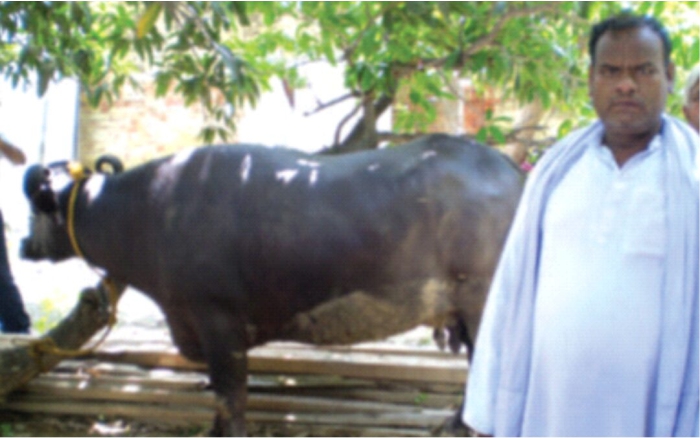
Subedar Yadav is a dairy farmer in Maudha village of Gazipur district of Uttar Pradesh, located on the border of Azamgarh district receiving cattle breeding services from BAIF’s Vizapur centre of Lalganj block in Azamgarh district. The livestock in this village is dominated by Murrah buffaloes as farmers have a good market for buffalo milk. Subedar was very fortunate to have a female buffalo calf born out of this programme which has now come into milk production and created a new record in the village by producing 18 litres milk per day in her peak. Recently, a buyer offered Rs. 72,000 for this priced buffalo but Subedar wanted Rs. 90,000 as he felt he could make more money by producing better quality heifers from this buffalo. Indeed! Even with one such buffalo, a farmer is able to attain prosperity.