Women Centric Solar Dryer Food Enterprise Project

Women Centric Solar Dryer Food Enterprise Project

Sitaram Rao Livelihoods India Case Study Compendium 2021

Agro and Food Processing for Advancing Rural Development

Women centric solar dryer enterprise is a livelihood model, focusing on the livelihoods of rural women of Haveli and Daund Taluka in Pune district of Maharashtra. Before understanding the model, one must understand the meaning of livelihood, which basically refers to securing the basic needs for human survival.  Livelihood is defined and factored into a set of activities in which an individual is involved to fulfil his or her needs for existence.  This covers the economic and social wellbeing of the individual. Securing livelihood opportunities for women is one of the many goals of the model. As women in rural areas are deprived of opportunities and chances of improving their living conditions and livelihoods.


In this case study, the major focus is to understand the importance of building capacities and giving opportunities to women in improving their livelihood. The beneficiaries of the case study are women of Self-help groups, who prior to the project intervention, engaged in minimal or no entrepreneurial activities Read more…

BAIF AI Technician awarded National Gopal Ratna Award

BAIF AI Technician awarded National Gopal Ratna Award

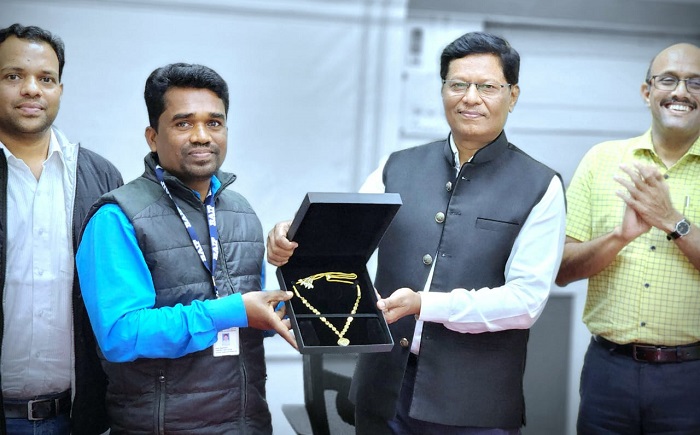
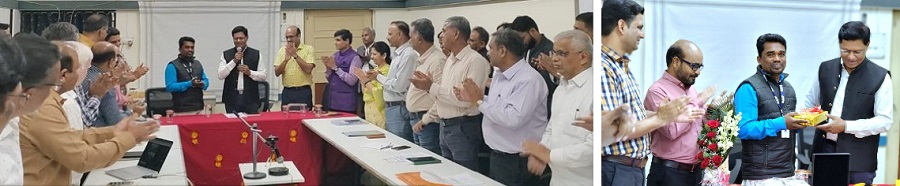
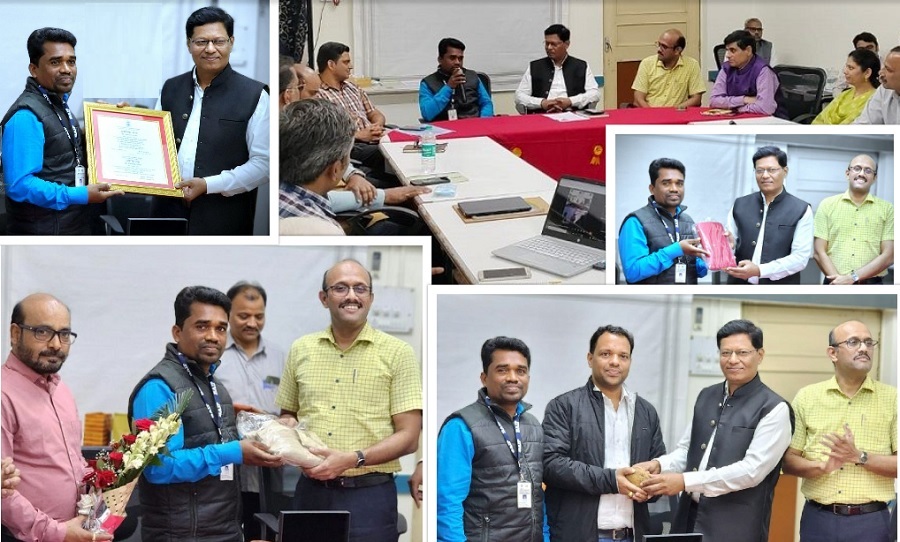
Nov 26, 2022: Shri. Gopal Rana, the Artificial Insemination Technician (AIT) under the BAIF Livelihoods Odisha Livestock Development Programme in the aspirational district of Balangir in Odisha, received the prestigious “Gopal Ratna Award” of the Government of India under the category of “Best AI Technician” today – November 26, 2022 in Bengaluru on the occasion of “National Milk Day”.  The award was conferred on him by Dr. Sanjeev Kumar Balyan, Hon’ble Minister of State – Fisheries, Animal Husbandry and Dairying, Department of Animal Husbandry and Dairying, Ministry of Fisheries, Animal Husbandry and Dairying, Government of India and Shri. Rajesh Kumar Singh, Secretary, Animal Husbandry Department, Government of India in the presence of dignitaries from the Central Government, Government of Karnataka, NDDB, Karnataka Milk Federation and Veterinary College among others. Shri. Rana was accompanied by Dr. Lokanath Behera, CEO, Odisha Livestock Resources Development Society and Shri. Vivek Singh, Additional Chief Programme Executive, BAIF Livelihoods Odisha. A certificate, memento and a cheque of Rs. 5 lakhs was handed over to Shri. Rana by the Hon’ble Minister and Secretary.  The ceremony was held at the Dr. Babu Rajendra Prasad International Convention Centre.

Compliments to Shri. Rana for this commendable recognition! The support received by BAIF from the Government of Odisha, which has contributed to the dairy sector of the State and empowered the youth to excel in doorstep livestock development services, is gratefully acknowledged. We also take this opportunity to thank the Government of India for recognising and encouraging grassroots efforts in nation building.

BAIF AI Technician wins the National Gopal Ratna Award

BAIF AI Technician wins the National Gopal Ratna Award

Nov 24, 2022: Shri. Gopal Rana, an Artificial Insemination Technician (AIT) under the BAIF Livelihoods Odisha Livestock Development Programme in the aspirational district of Balangir in Odisha, was adjudged the “Best AI Technician”, having secured the First Rank under this category for the prestigious “Gopal Ratna Award” instituted by the Government of India for the year 2022.  The award includes a certificate of merit, a memento and a cash prize of Rs. 5 lakhs.

National Gopal Ratna Award, one of the highest National Awards in the Livestock and Dairy Sector, aims at recognising and encouraging farmers rearing indigenous animals, AI Technicians, Dairy Cooperative Societies, Milk Producer Company and Dairy Farmers Producers Organizations. Gopal had to pass through various evaluation parameters as part of the selection process. He will receive the award on November 26, 2022 in Bengaluru on the occasion of “National Milk Day”.

This unassuming field technician has well demonstrated that there is no shortcut to success and is now a hero of sorts among AI technicians who are quietly providing efficient doorstep services to small farmers in various parts of the country and contributing to the growth of the livestock and dairy sector in the country.

This Award is also a testimony of the efficacy of the robust model pioneered by BAIF, integrating quality doorstep livestock development services with skilled local self-employment and a proud moment too as there are only three ranks in this category at the All-India level.

The support received by BAIF from the Government of Odisha, which has contributed to the dairy sector of the State and empowered the youth to excel in doorstep livestock development services, is gratefully acknowledged. We also take this opportunity to thank the Government of India for recognising and encouraging grassroots efforts in nation building.

UN climate summit: Pune-based BAIF’s ‘Wadi’ model discussed in COP

UN climate summit: Pune-based BAIF’s ‘Wadi’ model discussed in COP

The annual outreach of BAIF is about 3.3 million families in 325 districts of 13 states. (Express photo)

Nov 17, 2022 : ‘Wadi’ model, meant to help tribal and small landholders, allows the landholder to plant food crops for commercial sales and self-consumption. It was examined during the session held to discuss ways and means to increase organic carbon in the soil.


The ‘Wadi’ development model introduced by the Pune-headquartered BAIF Development Research Foundation (known as BAIF) that promotes fruit trees and forestry in the farming system was discussed at the ongoing Conference of Parties (COP) session in Egypt. The summit is being held as part of the United Nations Framework Convention on Climate Change (UNFCCC).


This programme, which is aimed at improving livelihood and giving access to nutrition for small landholders, was examined during the session held to discuss ways and means to increase organic carbon in soil.


Bharat Kakade, president and managing trustee, and senior thematic programme executives Sadashiv Nimbalkar, Yogesh Sawant and Raosaheb Kote represented the organisation at the 27th edition of COP session.


BAIF has been working on various initiatives mainly aimed at improving the livelihoods of poor families in rural areas along with conserving the natural resources. As BAIF’s programme focuses on sustainable development of communities with strong emphasis on climate change adaptation and mitigation, the key initiatives include agri-horti-forestry-based ‘Wadi’ programme, dairy, animal husbandry and soil health for food security and land degradation control for integrated and sustainable development in high-altitude and arid as well as semi-arid rainfed agriculture areas in India.


The annual outreach of BAIF is about 3.3 million families in 325 districts of 13 states.


The ‘Wadi’ model is meant to help tribal and small landholders. It allows the landholder to do horticulture and plant food crops on the land both for commercial sales and self-consumption by the farmer. Through this programme, BAIF encourages farmers to make the most of their holdings while ensuring food security and fixing organic carbon through sustainable agricultural practices.


Kakade highlighted how BAIF was closely connected with food security and carbon emission reduction initiatives. “BAIFs mission is to create opportunities for self-employment for needy families in the villages. The typical issues faced by small farmers in India are degraded lands, poor soil health resulting in low crop productivity thereby affecting the livelihoods of the poor. Several small holding farmers depend on seasonal migration for their livelihoods,” he said.


He further mentioned that BAIF has evolved and upscaled the Wadi-based programme (agri-horti-forestry) which has generated livelihood opportunities for 0.2 million smallholder farmers in their own land through capacity-building, skilling, training, and support for planting trees. The fruit trees are planted on the farm and forestry trees on the borders. Short gestation crops are cultivated in the interspaces. The production is aggregated and marketed by the farmer cooperatives.


The Wadi model would also sequester a significant quantity of carbon. BAIF expressed its decision to align its programmes with the strategic low-emissions development transitions outlined in India’s long-term Low Emissions Development Strategies (LT-LEDS) document released by the Union Minister for Environment, Forest and Climate Change Bhupender Yadav at the India pavilion at the COP session on November 14.

Jal Sahara Project awarded the CSR Box Award

Jal Sahara Project awarded the CSR Box Award

Nov 15, 2022:: Jal Sahara Project, implemented by BAIF Development Research Foundation and supported by Schaeffler India Limited, was recognised for its excellent outcomes and success by being awarded the CSR Box Award 2022 under “Rural Development” category.

The project has been formulated with the major objectives of providing water security through watershed management principles, improved agricultural practices, crop diversification and livelihood enhancement for the inhabitants of Tadawale village in Satara district of Maharashtra. Systematic and scientific management of the watersheds was based on the principles of watershed, improved agricultural production of treated landscapes, water availability and enhanced income. Digital Ecosystem of learning was adopted for the schools thereby replacing the traditional learning ecosystem which enhanced the quality of teaching and the working environment.

Construction of toilet blocks has resulted in excellent health and sanitation facilities for the students. Income of the poor families dependent on agriculture, has also increased after implementation while generating livelihood opportunities. 98 landless households have been provided support for small enterprise development through livelihood promotion activities which enhanced their income.

BAIF Development Research Foundation congratulates the project implementation team and CSR partner Schaeffler India Limited for winning CSR Box Award 2022!

Bovine Breeding and Dairy Cattle management training for MAITRI

Bovine Breeding and Dairy Cattle management training for MAITRI

Nov 15, 2022: BAIF Development Research Foundation/BAIF Livelihoods is implementing the Programme “Training of Youths & Scaling up Bovine Breeding Services through Establishment of 1,500 Multipurpose AI Technicians in Rural India (MAITRI)” with support from Odisha Livestock Resources Development Society (OLRDS). Hon’ble Chief Minister Shri. Naveen Patnaik presided over the MoU signing of this initiative in June 2022. Training of the 1st batch of 100 youth commenced at the Orissa State Cooperative Milk Producers’ Federation Ltd. (OMFED)’s Training & Demonstration Centre (OMTDC), in Khurda, an accredited AI Training Institute in the State, on 15th November 2022. The inaugural session was graced by Shri. Ashish Chandra Sinha, Managing Director, OMFED and Dr. Lokanath Behera, Chief Executive Officer, OLRDS, as Guests of Honour.

The esteemed guests impressed upon the youth, the importance of this training in providing quality bovine breeding and allied services to dairy farmers while ensuring gainful skilled self-employment. Shri. G.P. Sahu, Additional Chief Programme Executive, BAIF, elaborated the Programme objectives towards developing the dairy sector in the State.

Dr. J.K. Patnaik, DGM, OMFED, Dr. Biswaranjan Tripathy, Nodal Officer, OMTDC, Dr. Harapriya Das, Manager, OMTDC, Dr. Prasanta Das (Retd. Joint Director), Dr. B.N. Sahoo (Retd. CDVO), Dr. Santosh Kumar, Associate Programme Manager, BAIF and Shri. Ramakrushna Sahoo, District Programme Officer, BAIF were present on this occasion. Ms. Manisha Sahu, Senior HR Associate, BAIF, welcomed the dignitaries and the participants.

Seeding change: BAIF’s contribution to Tribal Development in India

Seeding change: BAIF’s contribution to Tribal Development in India

Nov 15, 2022

BAIF has developed need-based and region-specific tribal development models in the country taking into consideration the deprivations faced by tribal communities due to geographical isolation, under-developed areas, economic backwardness with dependence on subsistence livelihoods, primitive technologies and poor assets. 

To prevent seasonal distress migration of families living on the edge of the forests of the tribal belt of Vansda in South Gujarat, BAIF had launched a unique model of agri-horti-forestry-based farming system (known as “wadi” in tribal dialect) with the participation of 42 families in 1982. This model was scaled up to reach out to 0.21 million families, transform more than 86,000 ha degraded lands into productive orchards, ensure green cover, carbon sink, food security and economic prosperity to poor ST households. The model also impacted the lives of more than 0.5 million families in 25 states through NABARD-supported Tribal Development Fund.

BAIF has built a digital ecosystem of financial, utility and governance services with 150 E-dosts in remote tribal villages such as Pathardi in Palghar district of Maharashtra, fostering preservation of local knowledge and culture and transforming the lives of tribal girls by ensuring alternate livelihood in their own settings.

Building upon an ecologically sustainable lifestyle, rich bio-diversity and a vast repository of traditional knowledge, BAIF has designed a model on participatory in-situ conservation, revived agro-biodiversity and wild food resources and established a community-led seed system. “Nahari” – the indigenous tribal cuisine corner set up in South Gujarat, is reviving unique tribal traditions.

Directly reaching more than 100,000 households of Bhil, Gond, Kathkari, Kokna, Kolam, Kolcha, Kotwalia, Pawra, Sahariya, Thakur and Warli tribal groups in 11 states, the programmes have addressed food, health and nutrition security; revived useful tribal traditions, heritage agriculture systems; generated environmentally sound livelihoods and created opportunities for dignified livelihoods. It has also ensured an improved learning ecosystem and promoted life and livelihood skills with the establishment of residential ashram schools for tribal children. 

The Ministry of Tribal Affairs, Government of India, has designated BAIF as a “Centre of Excellence” for developing and disseminating ideas, approaches and appropriate technologies to enhance livelihood opportunities and living standards of tribal communities across the country. BAIF has also provided specific policy inputs on tribal development issues to the Government of India and various State Governments.

In continuation of the pledge made on the first Tribal Pride Day (“Janjatiya Gaurav Diwas”) on November 15, 2021, BAIF continues its mission of brightening the lives of tribal communities in the country. 

Jan Jatiya Gaurav Diwas celebrated by BAIF

Jan Jatiya Gaurav Diwas celebrated by BAIF

Nov 15, 2022: BAIF Development Research Foundation/BISLD Maharashtra team and Genome Saviour farmers participated in the programme organised by Tribal Development Department, Government of Maharashtra to celebrate Janjatiya Gaurav Diwas in Nashik, Maharashtra. Mr. Vijaykumar Gavit, Minister, Tribal Affairs, Government of Maharashtra, visited the BAIF stall accompanied by Mr. Hiralal Sonawane, Commissioner, Tribal Development Department, Ms. Leena Bansod, Managing Director, Shabri Adivasi Vitta Vikas Mahamandal, Ministry of Tribal Affairs, Government of Maharashtra and Dr. Rajendra Bharud, Commissioner, Tribal Research and Training Institute (TRTI), Pune. Mr. Yogesh Nawale, Senior Programme Operator, BAIF Livelihoods, highlighted the work of BAIF in tribal development.

The Seed Bank Project for community-led conservation, production and sale of crop diversity and wild edible plants, is being implemented with the support of Shabri Adivasi Vitta Vikas Mahamandal, in 13 villages of Akole block. BAIF is also implementing farm-based livelihoods projects for doubling the income of tribal farmers through horticulture, vegetable cultivation and floriculture in 23 villages of Jawhar, Vikramgad and Dahanu blocks of Palghar District with the support of the Government of Maharashtra.

Paying Homage to Manibhai Desai, the Founder of BAIF

Paying Homage to Manibhai Desai, the Founder of BAIF

Nov 14, 2022: Dr. Manibhai Desai – the Founder of BAIF and a close associate of Mahatma Gandhi, strongly believed in the traditional wisdom of rural and tribal families living in remote villages across India. Based on this belief, he launched various poverty-alleviation programmes in adverse situations with overwhelming support from these families. These programmes are now addressing various climate change issues encountered by vulnerable families through terrain-specific climate change adaptation and mitigation approaches across 12 states in the country. On his 29th death anniversary – November 14, 2022, the BAIF family pledges its continued mission of rural prosperity.

National Women’s Day celebrated under “Sathi” Project in Maharashtra

National Women’s Day celebrated under “Sathi” Project in Maharashtra

Nov. 03, 2022: National Women Farmer’s Day (Mahila Kisan Diwas) 2022 – a day which celebrates the feminisation of Indian agriculture through the emergence of champion women farmers, was observed under the “Sathi” Project at Kone village in Trimbakeshwar, Nashik district of Maharashtra on November 3, 2022.

This project aims at catalysing sustainable ecosystem and economic well-being of 405 rural women from six project villages of Trimbakeshwar region. It is being implemented by BAIF / BAIF Livelihoods Maharashtra with the support of Mukul Madhav Foundation (Finolex Industries Ltd.).

Nearly 100 women from six villages and 20 men farmers attended the programme which included series of talks on the role of women at home and in agriculture, importance of nutrition and nutrition sensitive-agriculture through kitchen gardens, health benefits from traditional crops such as millets and value addition of agricultural produce apart from providing valuable information on various Government schemes and how women farmers can avail from such schemes. Those present on the occasion included Mr. Pawan Chandratre, CSR, Finolex, Mr Sharad Thete, Agriculture Supervisor, Mr. Dattu Udhar, Sarpanch and Mr. Sachin Chaudhary, Panchayat Samiti Member and Ms. Ashlesha Deo, Mr. Tushar Jagtap and Ms. Meena Gangurde and project team members from BAIF. The vote of thanks was delivered by the Sarpanch of Kone village.   The women expressed their satisfaction with the knowledge gained and felt that this enhanced knowledge would enable them to contribute significantly to community development.

Plant breeder with a Story to tell

Plant breeder with a Story to tell

Nov. 1, 2022: The first day of November 2022 brought good news for Mavanji Pawar from Chowk, Valvenda in Jawhar, Palghar district of Maharashtra. His true breeder “Kamal” non-scented variety of rice (Oryza sativa L.), received the Plant Varieties Certificate of Registration from the Protection of Plant Varieties & Farmers Rights Authority, Government of India.


He is one of the many plant breeders of this tribal belt who due to their tribal antecedents, have grown up with an affinity towards cultivation, promotion and conservation of indigenous crops. Mavanji is quick to also acknowledge the contribution of his parents in enriching his native wisdom.  However, life for him was not smooth as he abruptly abandoned his studies and thereafter struggled as a shop floor operator at a factory in Silvassa, night-time watchman, a daily wages worker at the BAIF Field Station on research, demonstration and training at Jawhar till lady luck smiled on him and he landed himself the dream job of a Field Assistant to the Agro-biodiversity Conservation Programme being implemented by BAIF in 142 villages in nine clusters of four agro-climatic zones of Maharashtra. He has been associated with this programme since the last 14 years.


Establishment of a Community Seed Bank, registering with the Seed Savers’ Group at Jawhar, adoption of System of Rice Intensification (SRI) method of paddy cultivation, establishment of a paddy nursery, functioning as a Resource Person for 400 tribal students, conservation of more than 50 indigenous crop cultivars, purification and characterisation of paddy landraces, developing “Sadhana” and “Kirti” varieties of rice which are under registration process, attaining a production of about 1.9 tons of quality seeds of rice, millets and beans in the last three years and training more than 2000 farmers in rice cultivation techniques have been some of his achievements.


Featured in “Krishi Sutra”- Profiles of 100 Agricultural Innovators of India” published by the Ministry of Agriculture and Food Processing Industries, Government of India, Mavanji is also a recipient of the National Genome Saviour Farmers Award 2011 and the Best Farmer Innovator associated with BAIF Award 2013. His wife “Kamal” after whom he has registered his rice variety, is an active member of the Self Help Group of their village and also a much sought after E-Dost. This barefoot scientist who has shared his experiences at various state and national forums, Agricultural Universities and Krishi Vigyan Kendras, is truly an innovative farmer with an inventive mind.

Livestock Development Programme launched in Chhattisgarh

Livestock Development Programme launched in Chhattisgarh

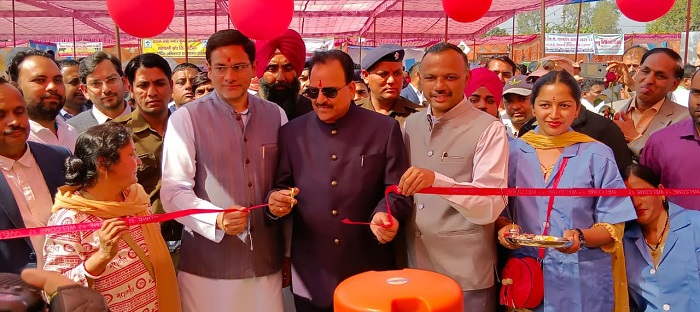
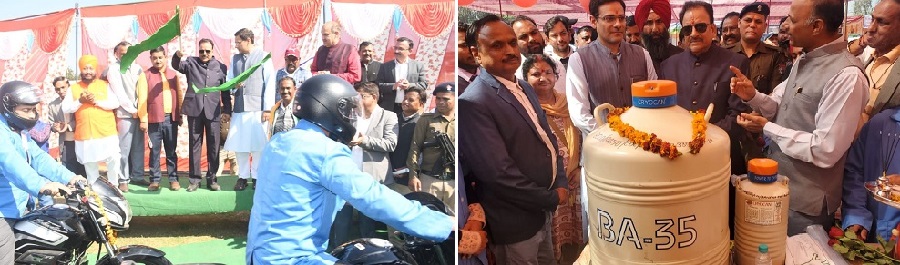
Oct. 21-22, 2022: Livestock Development Programme supported by Adani Foundation and implemented by BAIF Livelihoods Chhattisgarh, was launched in Chhattisgarh with the inauguration of the Cattle Development Centre at Chicholi, Tilda, Raipur district by Mr. Chandrasekhar Gowda, COO. This centre will cater to 800 households from 15 villages. Those present on the occasion were Mr. Thakur Ram Madhriya, Raj Pradhan, Mr. Birendra Kumar Nimbalkar, Sarpanch, Chicholi, Mr. Deepak Kumar Singh, Unit CSR Head, Adani Foundation (REL) and Mr. Himadri, Adani Foundation.

The Cattle Development Centre at Chhote Bhandar in Pusor,Raigarh district was inaugurated by Mr. Gowda and Ms. Satraupa Chauhan, Sarpanch, Chicholi Gram Panchayat on October 22. Mr. Purnendu Kumar, Unit CSR Head, Adani Foundation (REGL) and Mr. Vivek Pandey, CSR Coordinator, Adani Foundation, were present on this occasion. This centre will cater to 1500 households from 15 villages.

Mr. Gowda emphasized on the role of dairy husbandry in improving the income of rural households and expressed hope that these Centres will improve milk production with improved progenies and ensure better living standards for the dairy farmers. Mr. G.P. Sahu, Additional Chief Programme Executive, BAIF, highlighted the benefit of sex-sorted semen, fodder programme and utilisation of milk. Dr. Prafulla Nayak, BAIF, provided tips on good management practices. Dr. Chandra Sekhar Patel,  Veterinary Officer, Pusor, provided facilitation support.