Empowering Self and Others

Empowering Self and Others

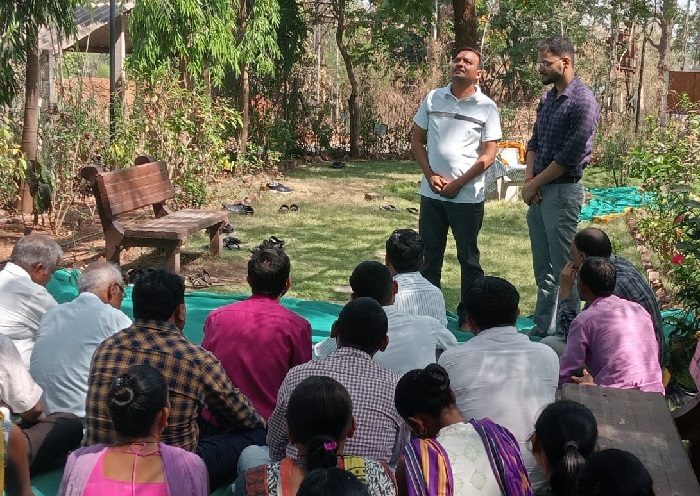
As a participant of the Prerna Project, Mangalagowri Akka learnt about improved agriculture practices, organic farming practices such as Integrated Nutrient Management, Integrated Pest Management and System of Rice Intensification Techniques.


Prior to the intervention, she was growing only Ragi, Cow Pea and a few vegetables. Today, she is growing crops such as Tur, Ragi, Cow Pea and leafy vegetables after realizing the significance of Crop diversification.


As a Champion Woman Farmer, she has encouraged almost 40 other women farmers in her area and has also been honored with the Best Women Farmer at taluka level by the Agriculture Department.


  • Before intervention Income was Rs. 80,000/annum
  • After intervention: Income is Rs 1,70,000/annum
  • (112.5 % increase in income)


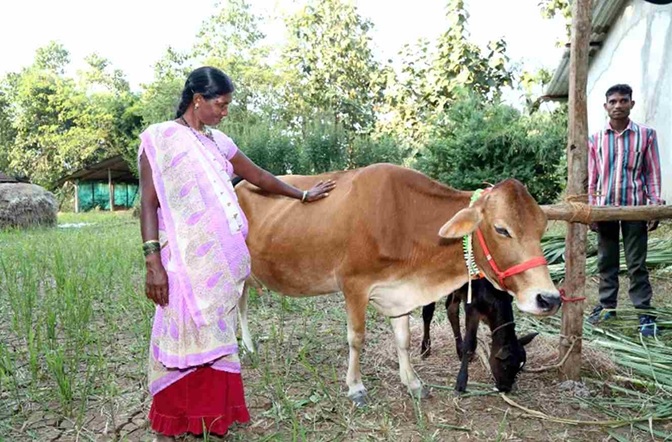
Her livestock assets have also increased from one to 5 cross bred cows. The milk produced (16 litres) is now sold to the milk collection centre of the Karnataka Milk Federation (KMF) in her village. Exposure visits to Krishi Vigyan Kendras (KVKs) and to the Agriculture University have motivated her to cultivate BNH 10 fodder in her 10 guntha land. Digital literacy sessions under Prerna Project have empowered her as a Google and Youtube  surfing expert and in collecting vital information on agriculture and livestock management. She also posts plant pathology-related queries to Agriculture experts regularly.


With the boost in her confidence and knowledge, she has also availed benefits in the form of seeds and fertilizers from the Agriculture Department and KVK for other farmers with a desire to help them also benefit from improved agricultural practices and management.

From Zero Income To Cent Per Cent Income

From Zero Income To Cent Per Cent Income

Vandana Chaudhari, a housewife from Junglepada ,Jawhar in Palghar district of Maharashtra,  started functioning as an eDost after being trained by BAIF in financial, e-governance and utility services. Prior to the intervention, she was a housewife and dependent on her husband for financial support. 


Now, as an eDost, she is earning Rs.4000/- per month.  She is happy to financially support her family and also for being financially independent.

She was identified as the Best Performer for January to March 2022 among 70 eDosts for achieving the highest transactions.

  • Income after intervention: 4,000/ month
  • Income before intervention: Zero income
  • Impact: 100% increase in income

Represented BAIF at the USAID Women Connect Challenges Awardees online event.


Digitally empowered and able to use search engines with ease for any kind of digital service sought for by the villagers, her enhanced confidence and knowledge are her strength. She is dealing with transactions to the tune of Rs.3 to 4 lakhs since December 2021.  She is also providing printing, reprographic and scanning services.

Success with Banana Crop

Success with Banana Crop

Dhirendrabhai Desai is a progressive farmer from Panetha village in Bharuch district of Gujarat and a beneficiary of the “Krishi Vigyan Kendra” (KVK) at Chaswad. Earlier, he used to cultivate banana crop using traditional methods of cultivation which used to yield one harvest only. However, after hearing about the successful experience of other farmers engaged in banana cultivation using innovative technologies and based on the advise of KVK scientists, he adopted innovative technologies such as Integrated Nutrient Management (INM), drip irrigation and tissue culture. He is the only farmer in the country to obtain three harvests of banana in 26 months. The gross income per ha from three harvests was Rs. 19.12 lakhs while the cost was Rs. 2.50 lakhs. A net income of Rs. 16.70 lakhs was generated per ha in 26 months with an assured net income of Rs. 5.56 lakhs per year.

The demand for his produce has travelled to  the  Middle East.  He  has  also esta bli shed abanana chips manufacturing unit at his village which is generating employment for unemployed youth. There are a lot of areas like Panetha village where water is available in surplus. Hence, banana can be cultivated as a profitable crop in water surplus areas.

A Dream come True

A Dream come True

To improve the income and quality of life of families in the tribal belt of South Gujarat, 125 families in Kaprada block of Valsad district of Gujarat were identified for the dairy development programme with special focus on women, through the induction of crossbred cattle and critical inputs such as mineral supplements, deworming, vaccination and insurance coverage. To enhance their capacities, the women were trained in various aspects of dairy development. 420 Sex-Sorted Semen Artificial Inseminations were undertaken and calf rearing programme support provided for 48 female calves.

The impact of the “Godaan Project” had to be seen to be believed. The average monthly milk procurement by 121 families recorded 22946 litres and the average monthly income Rs. 6.32 lakhs with an average milk yield of Rs. 28/ litre from November 2019 to October 2021. The average monthly income per participant increased from Rs. 2070 to Rs. 5255 during this period. 95 Gir calves were reported to be born out of sexed semen technology of which, 87 calves ( 91. 5%) were female calves. This programme has given the tribal families a better deal in life, food security and happiness.

New fodder varieties evolved by BAIF

New fodder varieties evolved by BAIF

Jul 13, 2022 : 

The Ministry of Agriculture and Farmers Welfare, Government of India notified and released BAIF-evolved fodder crop varieties of Pearl millet namely BAIF Bajra-5 and BAIF Bajra-6, as suitable for cultivation in Gujarat, Maharashtra and Madhya Pradesh vide their Notification of July 13, 2022.

Institutional Collaborative Meeting – BAIF and ICAR-IGFRI

Institutional Collaborative Meeting – BAIF and ICAR-IGFRI

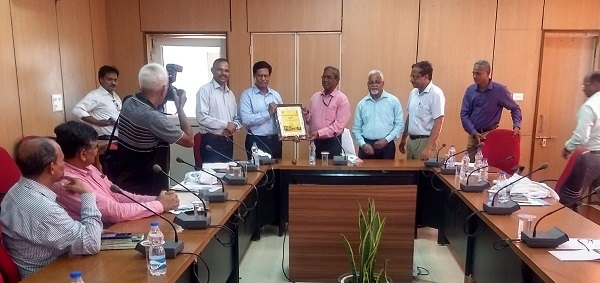
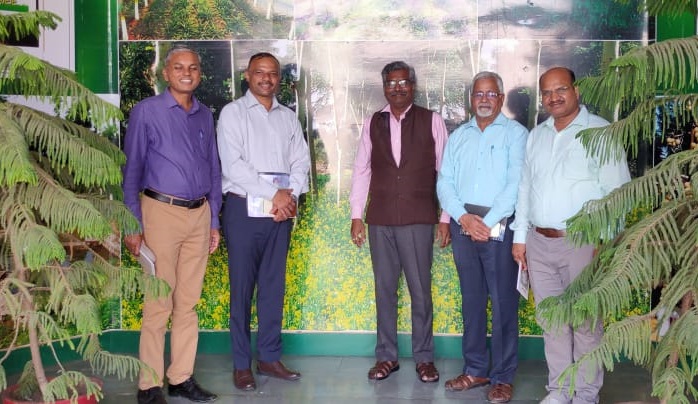
Jul 12, 2022: BAIF Senior Management headed by Mr. Bharat K. Kakade, President, and comprising of Dr.  Ashok Pande, Group Vice President, Scientific Research and Livestock Development, Dr. Raviraj Jadhav, Programme Director and Regional Director – BAIF Livelihoods North , Mr. Pramodkumar Takawale, Programme Director, Agricultural Research, Dr. Vitthal Kauthale, Senior Thematic Programme Executive and Shri. Vinay K. Mishra, Additional Chief Programme Executive, BISLD UP, had discussions with Dr. Amaresh Chandra, Director, ICAR-Indian Grassland and Fodder Research Institute, Jhansi and senior scientists of IGFRI on collaborative research and technology transfer including holistic development in Bundelkhand Region. The BAIF team visited various demonstration models on Silvipasture, Hortipasture and Forage Technology and the Plant-Animal Relationship and Farm Machinery and Post-harvest technology divisions.   The team also interacted with Dr. A. Arunachalam, Director, ICAR-Central Agroforestry Research Institute, Jhansi.

Visit of Secretary, MoTA to Model Village Development in Gujarat

Visit of Secretary, MoTA to Model Village Development in Gujarat

Jun 18, 2022 : The “Sansad Adarsh Village Development Project” at Mal Samot, Dediapada in Narmada district, was in the limelight when a high-level team of officials from the Ministry of Tribal Affairs, Government of India and Government of Gujarat visited the village. The Mission comprised of the Secretary, Ministry of Tribal Affairs, GoI, Mr. Anil Kumar Jha, IAS, Secretary, Tribal Development Department, Government of Gujarat, Dr. S. Murali Krishna, IAS, CEO, D-SAG, Gandhinagar, Mr. R.S. Ninama, IAS, Project Administrator, TSP Narmada, Mr. B.K. Patel, Schaeffler India – Senior Executive – CSR – Mr. Bilal Kazi, District Planning Officer, senior personnel from Narmada and Tapi districts, BAIF Programme Director (Programmes), Dr. Rajashree Joshi, Chief Programme Executive, Mr. Jayanti Mori, BISLD Gujarat and other senior officials from BAIF Pune and BISLD Gujarat.

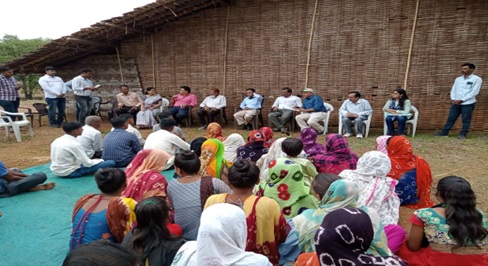
The Secretary, MoTA, appreciated the work of BAIF in holistic development and especially in the areas of sustainable agriculture, natural resources management, convergence and skill-based training. He also interacted with the farmers, women and youth of the village to learn about their progress and the problems encountered by the villagers. He also visited Dabka village to observe the functioning of solar-based water pumps for irrigation and interacted with the farmers about the scope of the watershed development programme in sustainable management of natural resources.  The visitors also took keen interest in understanding the initiatives taken up by BAIF in agro-biodiversity conservation and the practices of traditional healers in tribal areas.

MAITRI Project Launched

MAITRI Project Launched

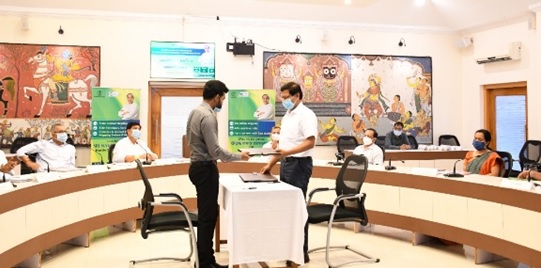
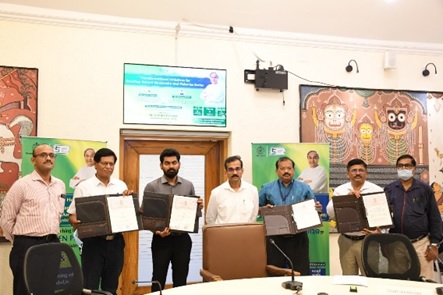
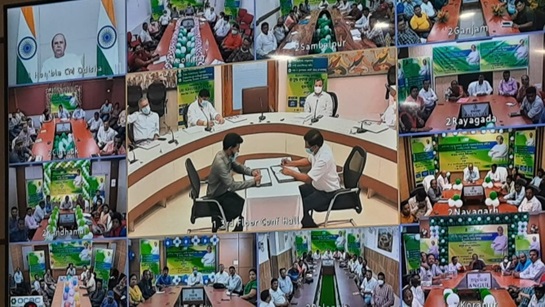
Jun 07, 2022: A MoU was signed between Odisha Livestock Resources Development Society  (OLRDS) and BAIF Livelihoods Odisha for providing bovine breeding and allied services by skilling and deployment of 1500 youth as Multipurpose Artificial Insemination Technicians in Rural India (MAITRI). Shri. Bharat Kakade, Managing Director, BAIF Livelihoods and President, BAIF Development Research Foundation and Dr. Yedulla Vijay, IAS, Vice President, OLRDS and Director, AH&VS, signed the MoU. Hon’ble Chief Minister of Odisha, Shri. Naveen Patnaik while presiding over the programne virtually, acknowledged the contribution of BAIF to bovine breeding and extended his best wishes to the organisation. The Minister, Fisheries and ARD, Chief Secretary, Additional Chief Secretary (Development Commissioner and APC), Principal Secretary, ARD and other dignitaries were present in-person at the event.

Secretary to Chief Minister, Shri. V.K. Pandian, IAS, Hon’ble Minister, Agriculture, Fisheries and ARD, Shri. Ranendra Pratap Swain, Shri. Suresh Chandra Mahapatra, Chief Secretary, Shri. Pradeep Kumar Jena, Development Commissioner, Shri. Sanjeev Chopra, Agriculture Production Commissioner, Shri. R. Raghu Prasad, Principal Secretary, Fisheries & ARD and Mrs. Sujata R. Karthikeyan, Secretary, Mission Shakti, graced the occasion along with other dignitaries.

How Coal India’s initiative turned barren land into profitable farmland in Odisha villages

How Coal India’s initiative turned barren land into profitable farmland in Odisha villages

May 24, 2022: Bipin Behera, 78, from Basiapada village in Jujumura block of Odisha’s Sambalpur district could barely make ends meet. The few acres of land he owned in a hilly, forested area were uncultivable. Poverty and the vicious cycle of debt had wreaked havoc on 27,000 farmer families in the coal mining districts of Angul, Jharsuguda, Sambalpur and Sundargarh. But things began to change in 2019 with ‘Utthan’, a community development programme initiated by Mahanadi Coalfields, a subsidiary of Coal India Limited (CIL).


The Rs 20.3 crore CSR (corporate social responsibility) project has helped convert barren lands into high-yielding assets and create sustainable farm livelihoods in 40 villages, benefitting approximately 25,000 people. The project has not only improved the economic status of 6,200 poor SC/ ST/ OBC households but also created a model for farm sector development that is being replicated by the wider community in the state. “The interventions made by Utthan are bearing positive results in terms of livelihood,” says B. Sairam, executive director (CSR), CIL.

The new farming model adopted is Wadi cultivation and includes inter-cropping with seasonal vegetables and horticulture (mango, lemon and custard apple, etc). Since adopting Wadi, Behera in March 2021 reported an income of Rs 68,000 from half acre of farm over a period of 18 months. He expects his annual farm income to stabilise at a minimum Rs 60,000 within five years of starting Wadi cultivation, once the trees bear fruit to their full potential.

Behera’s is one of the 6,500 farmer families to have benefitted from Utthan. According to CIL, the aim of the CSR initiative was to uplift the socio-economic status of 27,000 SC/ ST/ OBC people living in the project area. Implemented by the Pune-based not-for-profit BAIF (formerly Bharatiya Agro Industries Foundation) in a phased manner, Utthan aims to create sustainable livelihoods through a range of innovative farm-sector interventions related to agriculture, dairy, goatery, mushroom cultivation, backyard poultry, fodder development, etc.


Utthan also has additional goals of capacity-building and improving the overall quality of life by promoting sanitation, education and menstrual hygiene. In the long run, the project aims to showcase a self-sufficient and inclusive development model that is worthy of replication by the wider community.


Tribal villager Nala Pradhan’s revived fortunes is an example of the wide-ranging change that Utthan is bringing about. Pradhan owns three acres of land. Till 2019, he grew paddy on two acres. The rest of the land was unfit for cultivation. Since switching to Wadi cultivation, a large portion of the barren land now has 28 apple and 30 mango trees, from which he has earned nearly Rs 46,000 since early 2021. Inter-cropping fetched another Rs 60,000. Pradhan’s earnings are set to go up in the mango harvesting season. His success has convinced 25 other poor households to adopt Wadi; they were helped by BAIF with critical information on market access and price realisation.


Apart from farming, Utthan is also helping creating water storage capacities. Ponds are being dug and the base covered with polythene sheets to hold runoff water and stop seepage. To help reduce the cost of farming, Utthan has set up solar pumps in villages. These are operated by a self-help group of farmers who benefitted from the project.


For Wadi development, farmers bear 10 per cent of the cost of components (fertiliser, plants, fencing material, etc) and 40 per cent of the cost of labour. Farmers’ contribution to labour cost is higher to encourage families to provide free labour and reduce the loss of man-days.


There are many other success stories of Utthan. Saudamini Barik, a 38-year-old OBC resident of Birsinghgarh village in Sambalpur, started mushroom cultivation with 20 beds in 2019. Today, it has expanded to 200 beds. In the past year and a half, Barik has earned nearly Rs 1 lakh.


Utthan had so far set up 244 wadis, converting 122 acres of barren land into flourishing plantations. Some 935 paddy farmers witnessed a 15-20 per cent rise in their yield. Utthan aims to extend the coverage to 2,500 paddy farmers over the next five years.


Since vegetable farming is an important component of Utthan, efforts are on to train farmers to adopt newer techniques, such as trellis cultivation, to improve yield. More than 500 families have benefitted from this initiative alone. Irrigation potential has increased in at least 50 acres through measures like water harvesting, surface storage (50 new ponds storing 4 million litres), and setting up of eight solar pumps. Additionally, close to 800 families are getting better returns from livestock through dairy activities, goatery and poultry while 600 families have set up kitchen gardens to grow nutritional vegetables.
Maharashtra Gene Bank Programme for Conservation

Maharashtra Gene Bank Programme for Conservation

April 28, 2022 : 

‘Maharashtra Gene Bank Programme for Conservation, Management and Revival of Local Bio-Resources’ was initiated in the year 2014 covering over 142 villages spread over nine districts from different agro-climatic zones of Maharashtra. The BAIF Programme aims at preventing the erosion of valuable genetic resources, ensuring enriched knowledge and their conservation while being directly linked with food security, livelihood and climate change adaptation capacity of rural and tribal communities.

With an aim to document native natural resources and conserve them with the help of the local community that will ensure not just biodiversity conservation but also inclusion of traditional knowledge, the Maharashtra Cabinet approved the Maharashtra Gene Bank, a first-of-its-kind project in India.  BAIF welcomed the decision of the Government of Maharashtra to widen the scope of the Maharashtra Gene Bank Programme and continue its mission of Agrobiodiversity conservation.

A Day of Remembrance

A Day of Remembrance

April 27, 2022 : 

Dr. Manibhai Desai, the Founder of BAIF pioneered the Rural Development Movement in India. Today, it is because of his vision that 4 million families have come out of poverty through BAIF’s innovative programmes of dairy husbandry, water resources development and tribal rehabilitation and firm commitment to environmental protection, women empowerment and community health in 12 states. He also inspired thousands of youth to join the voluntary movement.  The BAIF family spread across various states paid their tribute to their Founder on the occasion of his 102nd birth anniversary and pledged to continue his mission of Sustainable Rural Development.

The Jan Samvad (community dialogue) initiative was launched on this day to commemorate the birth anniversary of Late Dr. Manibhai Desai. The event was held at Dr. Manibhai Desai Memorial Garden at Lachhakadi. Many villagers from surrounding villages who had worked with Dr. Manibhai Desai, shared their experiences and the transformation that had taken place in their lives and that of their villages. This initiative promoted by BISLD, South Gujarat, aims at establishing a regular dialogue with the community to enable them to share their experiences, issues, efforts and aspirations and to understand their perspective towards development, suitable solutions suggested by them and resources to be mobilised. With regular engagement with the local communities, data sets of potential villages and their issues will be generated and the scope for innovation and programme development will be strengthened.