55th Foundation Day of BAIF Celebrated

55th Foundation Day of BAIF Celebrated

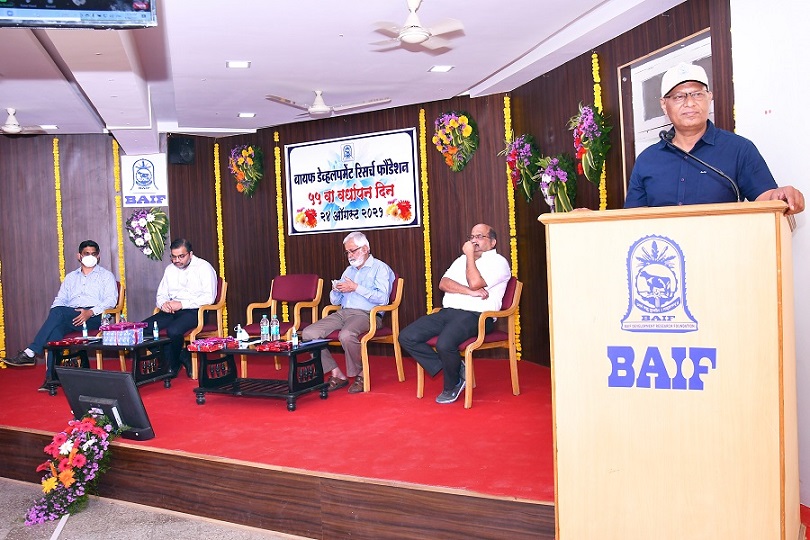
Addressing adverse impact of climate change on vulnerable communities, innovative technologies for human and environmental well-being, creating leadership among women, focus on non-farming communities and carbon positive development, are the strategic directions, stated Mr. Bharat Kakade, President and Managing Trustee at the 55th Foundation Day of BAIF which is serving 40 lakh families from one lakh villages in 12 states of India. The target is to reach 1.0 crore families in the next five years. The inherent capacity is the 6000 plus employees and dedicated field team. “Anna, Akshar, Arogya and Aacharan”- practiced by Shri. Arvindbhai Mafatlal, former Chairman, have been adopted with Gandhian engineering. Integration of human nutrition with conventional programmes, enriching the core programme with new age science and technology, agro-biodiversity and farm mechanisations are some of the immediate goals and Gandhian values, sustainability, institution building, being rooted to the ground and support from participant families, Central and State Governments, scientific institutions and corporate partners, are the guiding forces, he concluded.

The BAIF Annual Report, Research Highlights, Agroecology Approach to Sustainable Farming, Kaleidoscope – Resource Guide, Indigenous Crop Diversity – A Catalogue of Landraces, Establishment and Management of Community Seed Banks, Madhuca indica (Mahua): A Candidate Tree Catalogue and Approaches and Guidelines for Agro-biodiversity Conservation and Revival were released.

Best Cattle Development Centre In-charge – Mr. Rajkumar Maurya, UP, Best Multi-Activity Centre In-charge – Mr. Thippani Suresh, Telangana, Differently-abled AI technician – Mr. Sakhigopal Sahu, Odisha, Best Agricultural Farmer – Ms. Yashoda Yadav, MP, Best Dairy Farmer – Ms. Prema G.S., Karnataka and Best Wadi Farmer -Mr. Shamlal Vaishnav, Rajasthan. Dr. Manibhai Desai Gaurav Puraskar – Jamuna SHG, Betul, Second Best SHG – Urja Group, Urulikanchan and the Best SHG in Maharashtra – Mahalaxmi Matoshree Group.

The Guests of Honour were Mr. Vinod Kulkarni, CSR Head, The Tata Motors Ltd. and Mr. Santanu Ghoshal, Vice President, HR, Schaeffler India. Mr. Kulkarni appreciated the partnership with BAIF and the innovative hub programme for sustainable livelihood. Mr. Ghoshal expressed his appreciation of the work of BAIF and the impact of social investment.

Mr. Kishor Chaukar, Trustee, BAIF acknowledged the contribution of the messengers of BAIF in the growth of BAIF. Mr. Sunil Lalbhai, Chairperson, Finance Committee and HR Committee of BAIF Trustees appealed to BAIF to work on Five Minds of the Future for excellence.

Dr. Ashok Pande, Mr. Shrinivas Kulkarni, Mr. Sujit Gijare and Mr. Vijay Deshpande spoke on the occasion. The virtual event was attended by Mr. Girish Sohani, Principal Adviser and Trustee, BAIF and the BAIF staff.

BAIF completes 54 years of service in Rural Development

BAIF completes 54 years of service in Rural Development

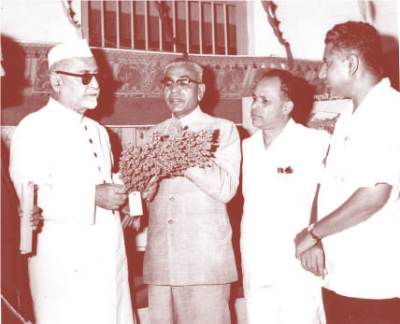
​On August 24, 1967, the Foundation Stone of BAIF was laid at Urulikanchan, near Pune, by the-then President of India, Dr. Zakir Hussain. It took 20 years for Dr. Manibhai Desai, who came to Urulikanchan in 1946 with Mahatma Gandhi, to develop a suitable income generation programme to address rural poverty. With the support of farmer leaders of Maharashtra, Manibhai established a Charitable Trust – “Bharatiya Agro Industries Foundation” (BAIF) to ensure remunerative employment for rural households at par with Industries and which was later renamed as “BAIF Development Research Foundation” to reiterate its focus on research and development for transferring modern, appropriate technologies to small farmers. The Founder Trustees included Shri. Yashwantrao Chavan, the-then Defence Minister of India as the Chairman, Shri. Vasantrao Naik, Chief Minister of Maharashtra as the Vice Chairman and Shri. Annasaheb Shinde, Union Minister of State for Agriculture, as Trustee. Later, Shri. Arvind Mafatlal joined the Trust as Chairman.

BAIF has contributed innovative and replicable models of development across the country. The climate-resilient multidisciplinary development programmes, professionally managed by more than 6000 employees, are benefitting 40 lakh families from 80,000 villages of 328 districts in 12 states. Over the years, various dignitaries have visited Urulikanchan including Prime Minister of India, Shri. Morarji Desai in 1977 and President of India, Dr. A.P.J. Abdul Kalam in 2002. Prime Minister of India. Shri. Narendra Modi addressed BAIF through video conference on the occasion of its Golden Jubilee in 2017.

On the occasion of its 55th Foundation Day on August 24, 2021, BAIF acknowledges the valuable guidance of its Trustees and support of its donors, well-wishers and participant families.

Role of Youth in Nation Building

Role of Youth in Nation Building

Aug 12, 2021: Youth are an important plank of BAIF’s integrated development programme. The local youth have played a significant role in community development through their active participation in various development programmes launched by BAIF in remote villages across the country. These barefoot technicians have encouraged the community to adopt appropriate technologies for rural prosperity. Over the last one decade, realizing the role of urban youth too in the process of development, BAIF has launched various Fellowship programmes.

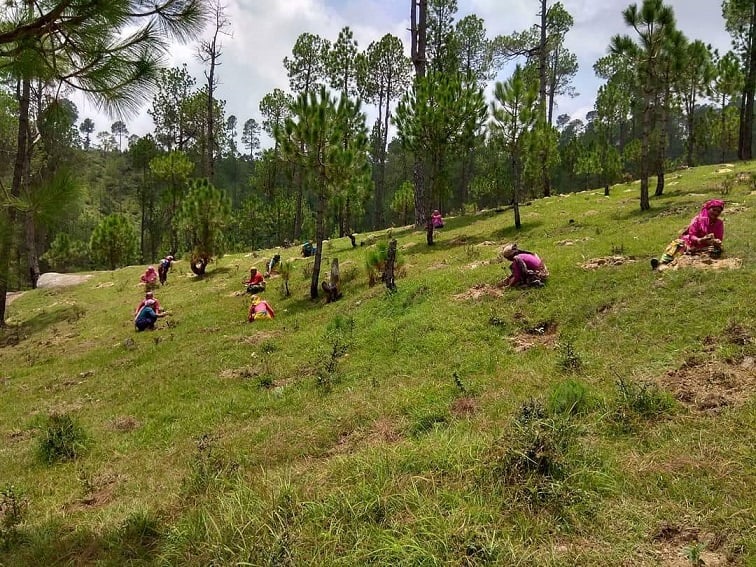
Under the SBI Youth For India Fellowship Programme, 9 youth and 5 youth under the SPARK-Janarth Fellowship Programme placed in various locations of BAIF, are involved in community mobilisation and application of appropriate science and technology in rural development. Some of these enterprising youth are also engaged in pilot production of pen stands, earthern lamps making use of cow dung; pine needle for making various handicrafts; digital promotion of BAIF’s tribal initiative Nahari; graphical and interactive manuals and identifying scalable interventions in value chains for locally abundant produce like Amchur (mango powder) and Mahua flowers and seeds. These youth are truly bridging the gap between rural and urban India.

BAIF Central Research Station: Premier Technology Development Centre

BAIF Central Research Station: Premier Technology Development Centre

On July 18, 1973, the Foundation Stone of BAIF Central Research Station was laid at Urulikanchan near Pune by Hon’ble Shri. Y.B. Chavan, the-then Union Finance Minister and Chairman of BAIF. In 1971, BAIF had received 200 heifers of Holstein Friesian and Jersey breeds from Denmark which had been housed at this campus. In the absence of adequate finance, the construction of the laboratories was delayed. Manibhaiji explained the noble cause for which the facility was needed, to Shri. B.G. Shirke, a local entrepreneur, who agreed to support and brought down the cost of construction to 30% of the market rate. The building was completed in record time. The laboratories became functional from January 1974.  

Today, the Research Centre, spread over 227 ha, with world-class laboratories, exotic bull mother farm and bull station, is engaged in state-of-the-art applied research, demonstration and extension of latest technologies in agro-based livelihood activities and is one of the Centres of Excellence in Animal husbandry and allied activities in India.

Tripartite MoU for Empowerment of Farming Community

Tripartite MoU for Empowerment of Farming Community

A MoU was signed between Maharana Pratap University of Agriculture and Technology (MPUAT), Hindustan Zinc Limited (HZL) and BAIF on 16th July, 2021 in the presence of Dr. Narendra Singh Rathore, Vice Chancellor, MPUAT, Mr. Bharat Kakade, President, BAIF, Ms. Anupam Nidhi, Head – CSR, HZL, Deans, MPUAT Colleges and HZL and BAIF Project teams.

The tripartite agreement aims at benefitting more than 30,000 farming families through various agricultural and livestock innovations under the SAMADHAN Project which is currently being implemented with the support of HZL.

Ms. Anupam Nidhi, emphasised on the need to encompass climate smart agriculture and carbon neutral initiatives apart from improved agricultural practices, ensure better remuneration to the farming community through community-based organizations with focus on post harvesting technologies and processing units and recognize the critical role and contribution of women farmers to the agriculture sector.

Dr. Narendra Singh Rathore highlighted the need to empower farming communities through large-scale integrated farming system and ensure food security. With the transformations in agricultural practices, emphasis on plant health was necessary to ensure ecological balance as well as food safety, he added. In the long run, natural farming would provide more benefit to the farming communities, he further added.

Mr. Bharat Kakade expressed his appreciation of the scope of the partnership in creating space for ushering in synergy which in turn can lead to impactful transformation. He also stated that considering the present challenges posed by climate change, such collaborations can provide further opportunities for developing and implementing programmes for the benefit of the rural communities.

The BAIF Brundtland Connection

The BAIF Brundtland Connection

On July 7, 1987, Mrs. Gro Harlem Brundtland, Prime Minister of Norway and Chairperson of the Brundtland Commission, who had come to New Delhi to launch the Report of the Brundtland Commission – “Our Common Future”, took a special flight to Urulikanchan near Pune, to view BAIF’s afforestation programme which was very popular in the country. She was very impressed with the Subabul plantation.

In 1976, “Hawaiian Giant” type of Leucaena had transformed most of the barren lands of BAIF into Leucaena seed farms while leading wood-based industries, procured Leucaena wood from BAIF for production of paper and newsprint. Considering its utility and benefits, in 1981, Prime Minister of India, Mrs. Indira Gandhi, renamed the “Kubabul” plant as “Subabul”. BAIF launched several Agroforestry, Wastelands Development and Industrial Greenbelt Development Projects in collaboration with leading Industries and Forest Department across the country.

BAIF Bhavan completes 25 Years

BAIF Bhavan completes 25 Years

June 19, 1996 – The dream of the Founder of BAIF, Dr. Manibhai Desai, to establish a unique training centre in Pune to impart management skills to professionals and field functionaries engaged in rural development, was fulfilled when Mr. Stanley Gooch, High Commissioner of Canada in India, inaugurated the “BAIF Bhavan” and “Dr. Manibhai Desai Management Training Centre” at Warje in Pune. The Training Centre with its spacious Classrooms, Conference hall, Board Room, IT Hub, Dining hall and Guest House, is spread over 8 acres. Trainings are imparted on Rural Livelihoods, Watershed Management, Climate Change Adaptation and Mitigation, Project Management, People’s Organisations and Soft Skills.

June 19, 2021 – This year marks the 25th year of the inauguration of BAIF Bhavan and Dr. Manibhai Desai Management Training Centre. The green cover amidst fast-paced urban development and serene surroundings, have developed a harmonious relationship among BAIF professionals in the premises and a close bond with the organisation. The model Training Centre, is one of its kinds in the country. For the BAIF family, BAIF Bhavan is much more than a structure. It is a part of their lives.

World Environment Day

World Environment Day

“We may adopt modern technologies from the west, but we should never overlook the pragmatic approach adopted in ancient times to restore the eco-system”.

-Dr. Manibhai Desai

Environmental protection has always been the main agenda of BAIF while fighting the war against rural poverty. Following the pattern of earlier years, this year too, World Environment Day, a very important day in the calendar of BAIF, will be observed throughout its operational areas in 12 states, by organising various programmes on environmental security and sustainability on the chosen global theme “Ecosystem Restoration”. A solemn pledge to continue the journey of conservation of natural resources and prevention of ecosystem degradation, will mark the day apart from making dedicated effort to encourage afforestation, prevent environmental pollution and create awareness among the general public who also include the future generations of the country while fulfilling the Sustainable Development Goals. 29 years ago, the “Green Cross” was launched by BAIF as its commitment to Environmental Protection and Conservation of Forests. The saga continues.

Workshop on Circular Economy

Workshop on Circular Economy

 A workshop on “Circular Economy” was jointly organised by BAIF and Environmental Management Centre, Pune on March 13, 2021.  This concept aims at redefining growth while focussing on positive benefits to the society. It rests on the belief that this sort of an economy will reform the management of resources and residues in the interest of economy, livelihoods and the environment.

Workshop on Circular Economy

Celebration of Women’s Day

International Women’s Day has become a special day in the lives of women for more than 3 decades. On this day, women revel in their strength which is the strength of the community and the society at large. This day is celebrated all over the world with enthusiasm and hope. BAIF too has been celebrating this day with various events across all its locations in 12 states.

In view of the forced change in lifestyle of everyone over the last one year, this year’s International Women’s Day was virtually celebrated with a special talk on this important topic. A special talk on “Promoting well-being of women and family during and post Covid-19 pandemic” by Dr. Sukhada Chimote Consultant Psychiatrist and Centre Head, Institute for Psychological Health, Pune was arranged on March 10, 2021 which enlisted a very encouraging response from BAIF staff from across 12 states. The talk concluded with an interactive question and answer session related to the overall well-being of women and their families.

On this occasion, 22 women farmers from 4 clusters of 14 villages in Yavatmal and Amravati districts of Maharashtra were also felicitated for promoting kitchen gardens with organically grown vegetables for nutritional security as well as an additional source of income. These women have truly demonstrated women power as an international power!

This important event was also celebrated in other BAIF locations. In Madhya Pradesh with women champion farmers from Satna, Betul, Mandla, Jhabua, Dindori; in Rajasthan by organising a farmers’ fair with farmers participating from 12 villages; in Jharkhand in Khunti, Dhanbad and Giridih and farmers’ fair at Maithon, Dhanbad; in Odisha in all cattle development clusters and Jal Samrudhhi project apart from celebration of 75 years of Indian independence) by all the clusters; in Karnataka in Rangainkoppalu village, Hunsur, Mysuru district and in Andhra Pradesh in Katamvaripalli, Prakasam district.

Workshop on Circular Economy

New Programme Launch by BAIF

“Mantra (ways, means and solutions), Tantra (technology), Disha (direction) and Gati (speed) are the wheels of planned development apart from participatory and community-led planning and implementation”, stated Mr. Girish G. Sohani, President and Managing Trustee, BAIF Development Research Foundation. “Adoption of these elements for ecosystem and economic well-being, thrust on decentralised employment and enterprise development and considering the village as the unit of development, can further strengthen the rural economy”, Mr. Sohani added.

Mr. Sohani was speaking at the virtual forum of the 2nd Rashtriya Sarpanch Sansad (National Village Heads’ Parliament) organised by the MIT Institute of Governance, Pune, on December 2, 2020. He further emphasised the role of every Sarpanch in consolidating the Seven Pillars of Development namely, Youth Power, Resilience, Sustainability, Green Economy, Enterprise Promotion along with Goal setting and clearly defined Milestones. There is a need to catalyse the process of development, so as to tackle climate change effects, ensure optimum use of renewable resources and promotion of new age enterprises based on renewable energy, ICT, and appropriate technologies such as polyhouses and small holder farm mechanisation. “Development should focus on new age ‘green enterprises’ in rural areas and creation of jobs around such enterprises for rural youth who may be reluctant to engage only in farming”, he further added.

He also highlighted the important role of Sarpanch/Village Heads during these challenging times of COVID and Climate Change-related disruptions and shared the Best Practices demonstrated by BAIF in the form of a cadre of over 5000 self-employed youth and community functionaries such as e-Dosts, rural technicians and service providers. He also assured handholding support from BAIF while planning for village development.

He announced the launch of Samruddha Gram Abhiyan, an ambitious participatory programme with the active involvement of local youth as the vehicle for grassroots development and invited the Sarpanch and Village level catalysts from various villages across the country, to register for this novel programme at https://manibhaiunnatgram.baif.org.in/ “This programme will be based on the learnings of BAIF’s rural livelihood programme and various successful development projects implemented by BAIF and will be implemented through Gram Panchayats, Farmer Producer Organisations and Watershed Development Committees to showcase various interventions which can be introduced with BAIF support at the village level”, he concluded.

Workshop on Circular Economy

Webinar on Ethno Veterinary Practices for treatment of Mastitis in milking cows

BAIF and Sakal Media Group jointly organized an online training programme on “Ethno Veterinary Practices for treatment of Mastitis in milking cows” on December 2, 2020. Dr. A.B. Pande, Group Vice President, Scientific Research and Livestock Development Programmes, highlighted the significance of Ethno Veterinary Medicine for improvement of milk quality while emphasising on the residue free milk – antibiotics and chemical residues. Mr. S.D. Nimbalkar, BAIF, delivered a talk on the use of Ethno Veterinary Practice as an alternate system of medicine for control of Mastitis and shared the BAIF experience in Karnataka, Maharashtra and Gujarat. Dr. Amul Wagh, BAIF Institute for Sustainable Development, Gujarat, briefed about the symptoms, cause and precautions for control of mastitis in cows and the encouraging mastitis cure by use of Ethno Veterinary Medicine at farmers level in Gujarat. 28 participants comprising of veterinarians, youth and farmers attended this programme.